
Import trends reshaping precision tooling supply in 2026
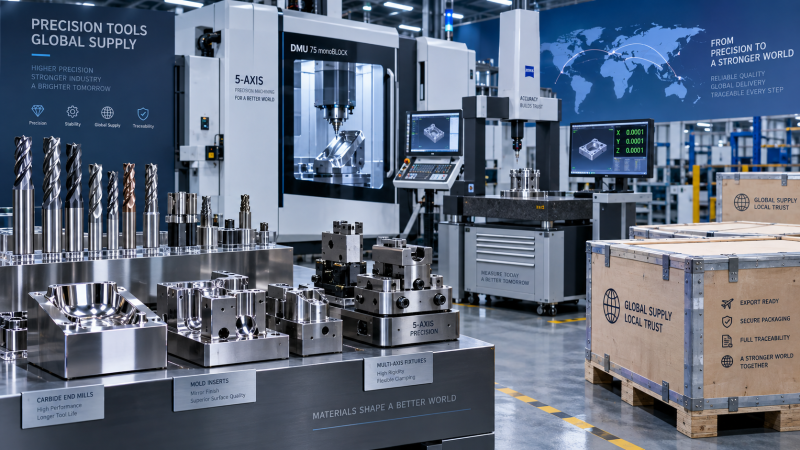
Import trends are reshaping precision tooling supply in 2026 as procurement teams weigh far more than the unit price of a cutter, fixture, spindle component, or mold insert. A delayed shipment of qualified tooling can idle a machining cell, disrupt an EPC schedule, or compromise a launch program whose tolerances leave no room for substitution. For business evaluators, the central question is no longer simply where a tool is made. It is whether the supplier network can sustain repeatable performance under changing trade rules, material constraints, documentation demands, and transport uncertainty.
Precision tooling sits at the intersection of several pressures: advanced CNC capacity, specialty steel and carbide availability, coating technology, metrology discipline, and increasingly strict traceability. The result is a more selective import environment. Buyers are retaining global sourcing options, but they are assigning a higher value to technical visibility and recoverability when plans change.
From lowest landed cost to controllable landed risk
For many years, cross-border tooling decisions were led by a familiar calculation: quoted price, freight, duty, and lead time. That calculation remains necessary, yet it is inadequate for high-consequence applications. A low-cost imported fixture loses its appeal if the drawing revision is misunderstood, the material certificate cannot be verified, or a replacement cannot be supplied before a production window closes.
In 2026, the more useful procurement metric is controllable landed risk. It combines financial exposure with operational factors that are often separated across departments:
- Conformity of material, geometry, heat treatment, coating, and dimensional inspection records;
- Reliability of export documentation, tariff classification, and country-of-origin declarations;
- Supplier capacity to respond to engineering changes and nonconformance reports;
- Availability of critical consumables, replacement parts, and technical support after delivery;
- Exposure to long transport lanes, port congestion, customs holds, and single-country dependencies.
This shift changes the role of the business evaluator. The assignment is not merely to compare vendors; it is to determine whether a proposed source is compatible with the organization’s production risk tolerance. For standard catalog tooling, broad import competition may continue to deliver value. For aerospace fixtures, multi-axis machining workholding, complex dies, precision molds, or tooling used on validated production lines, the evaluation must go considerably deeper.
Regional sourcing is becoming more deliberately layered
The strongest of today’s import trends is not a wholesale retreat from international buying. It is the construction of layered supply networks. Companies may source high-volume or mature tooling from established offshore partners, reserve regional suppliers for urgent changes and repair work, and qualify an additional source for strategic continuity. This approach costs more to manage than a single-source arrangement, but it can reduce the damage caused by one disrupted lane or one overloaded factory.
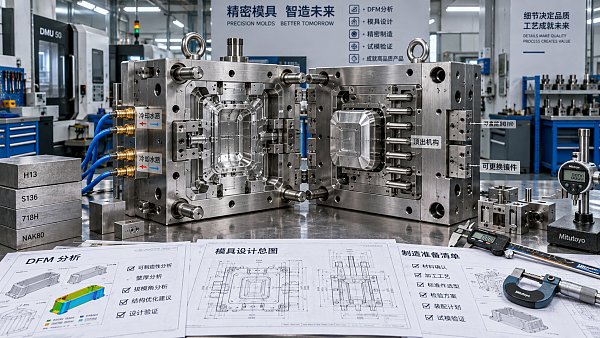
Nearshoring is particularly relevant where tooling is closely tied to iterative engineering. A die-casting mold may require sampling, surface adjustments, thermal balancing, or localized modifications after initial trials. In such cases, geographical proximity is valuable not because imported tooling is inherently unsuitable, but because feedback cycles matter. The cost of waiting through international transit can exceed the initial saving on the tool itself.
At the same time, Asia-based manufacturing remains essential to the global tooling ecosystem, especially across broad catalogs of cutting tools, components, castings, mold bases, and machining capacity. The more mature procurement position is not “domestic versus imported.” It is segmentation: deciding which tooling families can tolerate a long replenishment path and which require shorter, more direct engineering access.
Advanced CNC capability is no longer proven by machine count
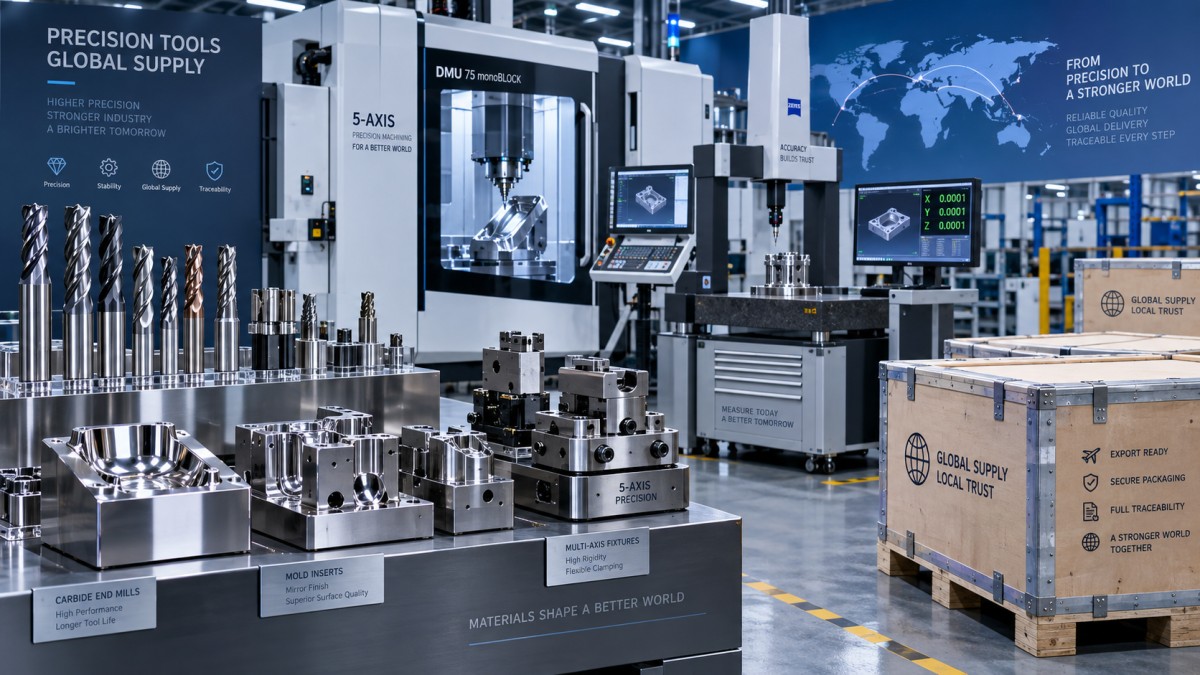
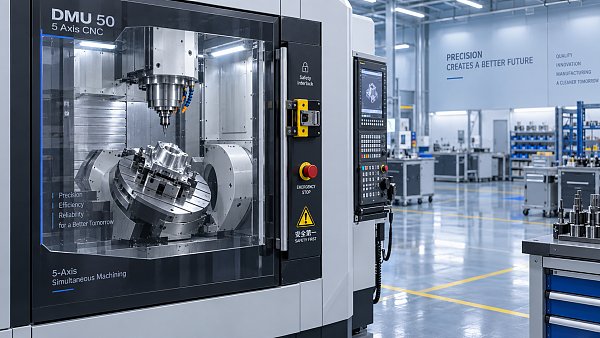
Supplier presentations often emphasize 5-axis machining centers, automated pallet systems, or impressive production-floor photographs. These assets matter, but they do not independently prove a supplier’s ability to deliver precision tooling consistently. Business evaluators increasingly look for the system around the machine: programming governance, fixturing design, in-process probing, calibrated inspection equipment, tool-life control, and documented reaction plans when a measured feature drifts.
This matters because imported tooling frequently fails at the handoff between design intent and manufacturing execution. A supplier may possess the equipment to produce a complex part but lack a robust process for managing datum strategy, revision control, or inspection correlation with the buyer’s gauges. The resulting part can appear acceptable on a supplier’s report while creating assembly issues at the receiving plant.
A stronger technical review asks practical questions. Which dimensions are measured in-process, and which are confirmed in final inspection? Is the measurement method suitable for the tolerance being claimed? How are programs and drawings locked after approval? Can the supplier provide raw inspection data rather than only a pass/fail certificate? What happens when a subcontracted coating, grinding, or heat-treatment operation affects a critical feature?
These questions are especially important for sub-micron or near-sub-micron requirements, where environmental conditions, gauge capability, and measurement uncertainty become part of the commercial decision. A specification that is not measurable in a repeatable way is not fully controlled, regardless of how compelling the quotation appears.
Materials and coatings are moving to the center of import evaluation
Precision tooling performance is increasingly shaped by the material chain behind it. Tool steels, tungsten carbide grades, superalloy-compatible cutting geometries, PVD and CVD coatings, engineered polymers, and specialty seal materials all have different exposure profiles. Availability can change with raw-material markets, energy costs, export restrictions, and upstream processing capacity. A buyer who evaluates only the finished tool may miss the real source of future disruption.
For example, a mold insert may be specified by nominal steel grade, but the outcome also depends on cleanliness, heat-treatment practice, hardness uniformity, and surface finishing. A high-speed cutting tool may carry a familiar coating label, yet its real-world performance depends on coating thickness, adhesion, edge preparation, substrate grade, and compatibility with the workpiece material and coolant strategy.
Import trends in 2026 therefore favor more explicit material verification. Procurement teams are requesting traceable mill certificates where appropriate, heat-treatment records, coating specifications, and clearer disclosure of critical subcontractors. This should not become a paperwork exercise. The purpose is to connect a tool’s claimed performance to evidence that can be reviewed when tool life falls short, a failure occurs, or a regulated customer requests an audit trail.
Compliance is becoming an engineering issue, not only a customs task
Trade compliance has traditionally been handled near shipment release. That timing is increasingly risky for precision tooling. Tariff classifications, origin rules, restricted-material declarations, dual-use considerations, and destination-specific technical requirements can affect the cost and feasibility of an order long before goods reach the port.
For evaluators, the key distinction is between a supplier who can produce documents and one who understands the product well enough to support accurate documentation. Misclassification can create unplanned duty exposure. Unclear origin declarations can complicate preferential trade treatment. Incomplete chemical or material information can delay customer approvals, particularly in sectors with formal environmental, safety, or product-compliance processes.
International standards still provide a useful common language. ISO, DIN, ASME, and JIS references can help align drawings, threads, tolerances, surface requirements, and test methods across borders. Yet a standard number on a quotation is not confirmation of conformity. Buyers should establish which revision applies, which characteristics are critical, what evidence will be supplied, and whether equivalent local standards are being used correctly.
The quiet rise of tooling-as-a-service expectations
Another notable movement in the market is the expectation that suppliers will support the tool after import, not simply ship it. This does not always mean a formal service contract. It may mean digital access to setup guidance, recommended cutting parameters, replacement-component identification, troubleshooting support, or controlled regrind and refurbishment options.
The need is most visible in high-value cutting tools and custom workholding. A tool that is technically correct but poorly introduced into the process may underperform. If the local production team cannot obtain application guidance quickly, it may compensate by reducing feed rates, altering parameters without validation, or replacing the tool prematurely. Those responses obscure the real cost of the sourcing decision.
Business evaluators should therefore ask how knowledge travels with the product. Are setup sheets available in the working language of the plant? Are recommended conditions tied to the actual material and machine type? Is there a named technical contact capable of addressing runout, chatter, chip evacuation, sealing, or thermal issues? These details may feel secondary during tender review, but they become decisive on a difficult shift.
How to evaluate imported precision tooling without slowing every purchase
Not every procurement event deserves the same level of scrutiny. The practical answer is a risk-based qualification model. Classify tooling by production criticality, technical complexity, replaceability, annual spend, and consequence of failure. This allows teams to preserve speed for low-risk standard items while applying stronger controls to tools that could stop a line or compromise product quality.
For critical imported tooling, an effective review commonly includes the following:
- Specification clarity: Confirm drawings, tolerances, material grades, standards, coating requirements, inspection points, and revision ownership before the purchase order is released.
- Capability evidence: Review relevant machine capacity, inspection capability, process controls, and comparable manufacturing experience rather than relying on generic capability statements.
- Sample and approval route: Define first-article expectations, measurement-report format, acceptance authority, and the process for resolving deviations.
- Supply continuity: Identify critical raw materials, subcontract processes, lead-time dependencies, minimum order constraints, and backup options.
- Commercial protection: Align Incoterms, packaging requirements, warranty boundaries, spare-parts commitments, and responsibility for freight damage or customs documentation.
A common mistake is to apply the same qualification burden to every supplier and then wonder why sourcing becomes slow. The better approach is proportional governance: strict where failure is expensive, streamlined where specifications are stable and substitutes are readily available.
Signals to watch through the rest of 2026
Several market signals deserve regular monitoring. Lead-time changes for carbide, alloy steel, coatings, and precision bearings may indicate a broader capacity constraint before it appears in finished-tool quotations. Repeated requests for drawing clarification can reveal a supplier’s diligence—or an underlying gap in technical interpretation. Changes in freight routes, duty treatment, or country-of-origin rules should be reviewed before annual contracts are renewed, not after the first delayed shipment.
It is also worth tracking the difference between quoted capacity and demonstrated delivery performance. In a tightening market, suppliers may accept work that stretches their engineering and inspection resources. The result is not always an obvious late delivery; it can be a gradual decline in documentation quality, response time, or consistency between lots.
Global Precision-Machining & Engineering monitors these connected conditions across CNC machining and tooling, fastening and sealing, fluid-control systems, die-casting and mold engineering, and industrial lubricants and functional chemicals. This wider view matters because tooling reliability is rarely isolated. It is affected by the lubricant used in machining, the sealing performance of a fixture, the availability of pump components, and the integrity of every process surrounding the final part.
A more resilient definition of value
The import trends influencing precision tooling supply in 2026 point toward one conclusion: value is increasingly defined by predictability. The winning source is not automatically the closest, the cheapest, or the most technically ambitious. It is the source whose capability, documentation, material chain, logistics path, and support model match the importance of the application.
For business evaluators, this is a demanding but useful change. It replaces vague confidence with evidence-based selection. When a tool is needed to hold a demanding tolerance, maintain cycle time, or protect a critical project milestone, the most important question is no longer “What is the import price?” It is “What conditions must remain true for this tool to perform as promised—and have we verified them?”
Recommended News
 What to verify in a fluid control manufacturer's quality systemFluid control manufacturer quality checks: verify traceability, testing, calibration, document control, and corrective actions to reduce risk.
 When do smart device manufacturing solutions reduce assembly errors?Smart device manufacturing solutions reduce assembly errors with closed-loop controls, vision inspection, torque verification, and traceable process data. Learn what drives reliable production.
 Import trends reshaping precision tooling supply in 2026Import trends in 2026 are reshaping precision tooling supply. Discover how to reduce landed risk, strengthen sourcing resilience, and protect production performance.
 Choosing carbide end mills for stainless steel without edge chippingCarbide end mills for stainless steel: learn how to prevent edge chipping with the right substrate, geometry, coating, coolant, and stable milling parameters.
 What contract manufacturing support should cover before sourcingIndustrial procurement support for contract manufacturing: learn what to verify before sourcing, from DFM and traceability to quality, capacity, cost control, and compliance.
 When integrated precision manufacturing solutions reduce launch delaysIntegrated precision manufacturing solutions help industrial teams prevent launch delays by aligning design, sourcing, machining, sealing, testing, and supply-chain readiness.
 What a tooling fee covers before an injection mold is builtTooling fee explained: discover what it covers before an injection mold is built, from DFM and mold design to validation, ownership, and cost control.
 When a horizontal boring machine improves accuracy in large metal partsDiscover when a horizontal boring machine for metalworking improves accuracy in large parts, protecting critical bore alignment, stable datums, and assembly-ready results.
 What to verify before choosing a fluid control supplier for critical flowChoose a fluid control supplier with confidence: verify pressure cycling, material compatibility, flow validation, traceability, sealing, and long-term support for critical applications.
 Cleanroom equipment application guidance to reduce contamination riskIndustrial application guidance for cleanroom equipment: reduce contamination risk with practical airflow, material flow, maintenance, and process protection strategies.
 When should wind turbine parts be replaced instead of repaired?Wind turbine parts: learn when replacement is safer than repair, how to reduce repeat failures, protect uptime, and make smarter maintenance decisions.
 What to verify before choosing a coolant flow rate and pressure supplierCoolant flow rate and pressure supplier selection guide: verify duty points, pump curves, filtration, controls and service support for reliable machining performance.
 How mold design choices affect cooling time in injection moldingDiscover how mold design affects injection molding cooling time, part stability, cycle efficiency, and long-term production quality with practical engineering insights.
 Machine tool standards alerts that require 5-axis safety procedure updatesMachine tool standards alerts can trigger critical 5-axis safety procedure updates. Learn which changes demand action to protect operators, equipment, and production uptime.
 Does manufacturing standards compliance for semiconductors affect EDM tool approval?Manufacturing standards compliance for semiconductors shapes EDM tool approval through traceability, validation, contamination control, and inspection. Learn what proves reliable capability.
 Which medical grade materials withstand repeated sterilization in pumps?Medical grade materials for sterilizable pumps: compare 316L, PEEK, PPSU, PTFE, silicone, and EPDM for steam, radiation, and chemical resistance.
 What G-code compatibility issues arise when moving to 5-axis centers?G code compatibility issues in 5-axis centers can affect TCP, rotary limits, feeds, and safety. Learn how to validate programs before production.
 Can custom mailer boxes reduce damage costs in subscription shipping?Custommailerboxes can lower subscription shipping damage costs through right-sizing, protective inserts, stronger materials, and efficient pack-out. Discover how to reduce claims and improve delivery performance.
 How to assess a lubricants manufacturer's batch traceabilityLubricants manufacturer batch traceability: learn how to audit records, controls, CoAs, packaging, and recall readiness to reduce supply risk and protect uptime.
 When solar inverters should be replaced instead of repairedSolar inverters: learn when recurring faults, obsolete parts, safety damage, and rising lifecycle costs make replacement smarter than repair.
 What to verify before choosing a first aid kits distributorFirst aid kits distributor checklist: verify compliance, traceability, expiry control, replenishment, and multi-site delivery before choosing a reliable supplier.















Search News
Popular Tags