
CNC cutting tools wholesale trends reshaping buyer choices
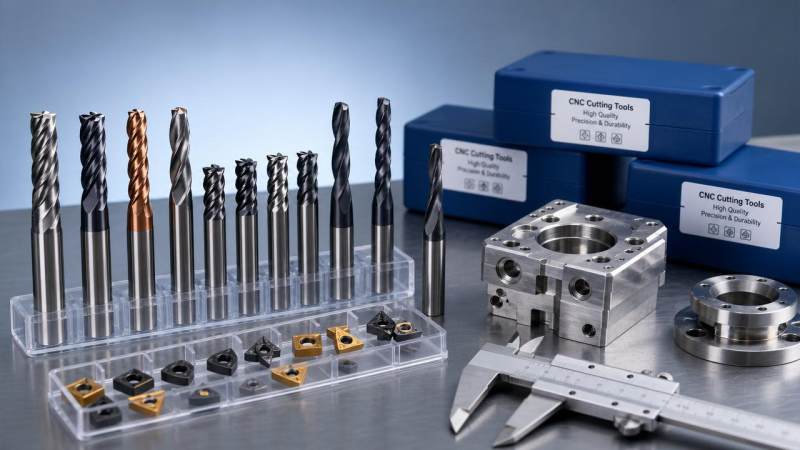
As procurement teams rethink sourcing priorities, cnc cutting tools wholesale is no longer driven by price alone. Buyers now compare tool life, coating stability, substrate quality, delivery reliability, and standards compliance before placing volume orders. In precision-driven industries, these shifts directly affect machining consistency, downtime exposure, and total cost per part.
Across the broader industrial landscape, wholesale decisions are becoming more technical and data-led. From automotive and energy components to molds, fluid systems, and general engineering parts, cutting performance now links closely to supply-chain resilience. That is why understanding the latest cnc cutting tools wholesale trends matters for any organization evaluating long-term sourcing value.
Why checklist-based evaluation now matters in cnc cutting tools wholesale
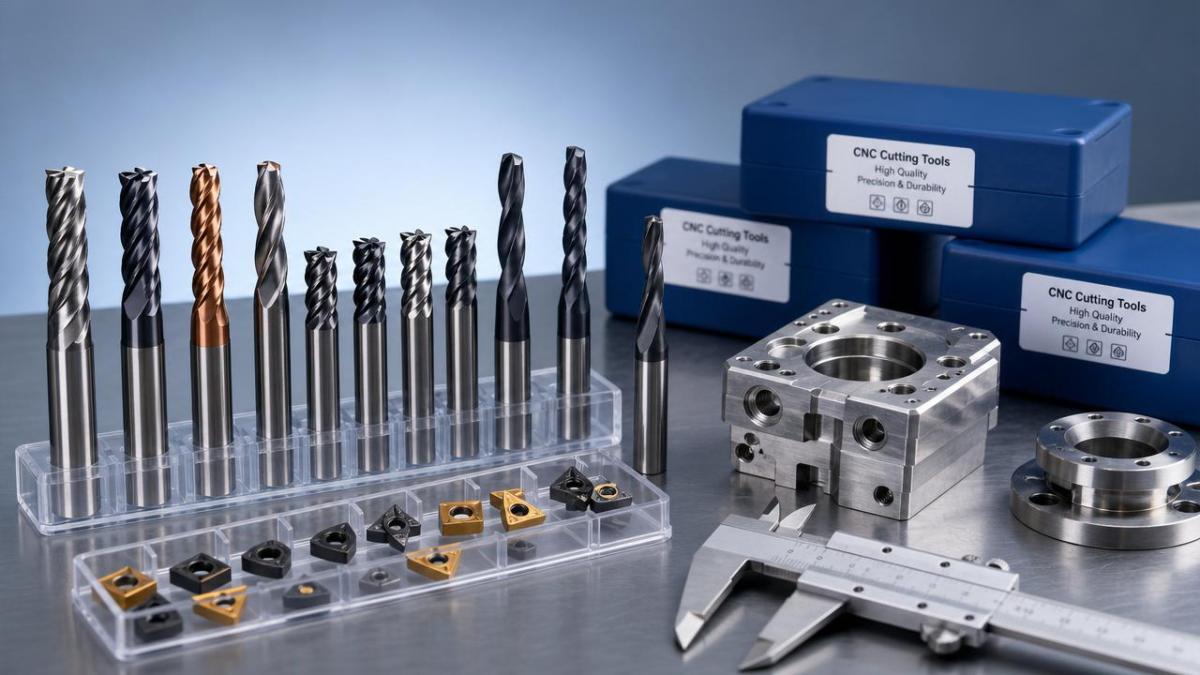
Wholesale buying has become harder because technical risk hides behind similar-looking catalogs. Two end mills may share dimensions, yet differ sharply in carbide grade, edge prep, coating adhesion, and lot consistency. A checklist helps separate nominal specification from verified machining performance.
It also supports cleaner comparisons across suppliers. In modern cnc cutting tools wholesale, decisions must account for traceability, inventory depth, regrinding potential, packaging control, and regional logistics. A structured review reduces surprise costs and improves repeatability across multiple production sites.
Core checklist reshaping buyer choices
Use the following points to assess cnc cutting tools wholesale offers before comparing unit prices. Each checkpoint connects directly to machining stability, batch predictability, and lifecycle economics.
- Verify carbide substrate grade against the target material group, because tool behavior in stainless steel, cast iron, titanium, and hardened steel changes with grain structure and toughness balance.
- Check coating type and deposition quality, then match TiAlN, AlCrN, DLC, or multilayer systems to spindle speed, heat generation, lubrication method, and dry-cutting demands.
- Request tool life data under comparable cutting conditions, including speed, feed, depth of cut, and coolant status, instead of accepting isolated benchmark claims.
- Confirm dimensional consistency across lots, especially for drills, inserts, and end mills used in automated lines where variation can destabilize offsets and increase scrap.
- Review edge preparation and chipbreaker geometry, since micro-honing, rake angle, and flute form strongly influence burr formation, evacuation, and surface integrity.
- Audit standards compliance and documentation, including ISO-linked quality systems, material traceability, batch coding, and inspection records for regulated or export-sensitive industries.
- Measure supply-chain resilience by checking safety stock, lead-time stability, alternate production sites, and responsiveness during raw material fluctuations or transport disruptions.
- Compare total value-added services, such as regrinding, technical troubleshooting, application engineering, and custom geometry support for difficult or high-volume programs.
- Examine packaging and preservation controls, because poor tray design, humidity exposure, or mixed-label handling can damage precision edges before shop-floor use.
- Model total cost per machined part, not just purchase price, by combining cycle time, tool changes, reject risk, machine stoppage, and inventory carrying cost.
How cnc cutting tools wholesale trends vary by application
High-mix precision machining
In high-mix workshops, cnc cutting tools wholesale is shifting toward versatile tool families with broad material coverage. Buyers prefer SKUs that reduce setup complexity and support frequent program changes without sacrificing surface finish.
This favors suppliers offering stable geometry, clear cutting parameter libraries, and quick replenishment. Catalog depth matters more than extreme discounting when machine uptime depends on tool availability across many small batches.
Mass production lines
For repetitive production, wholesale evaluation centers on lot-to-lot consistency and predictable wear curves. Even minor insert variation can affect automated compensation routines, machine alarms, and finished dimensions over long unattended runs.
In this setting, the strongest cnc cutting tools wholesale partners provide batch traceability, scheduled delivery windows, and field support for line optimization. Technical stability usually outweighs headline piece-price reductions.
Difficult materials and engineered components
Titanium, nickel alloys, hardened steels, and abrasive composites have changed sourcing behavior. Wholesale buyers increasingly demand application-specific coatings, stronger edge retention, and documented heat resistance before approving volume supply.
Here, cnc cutting tools wholesale decisions often include test reports, trial batches, and collaboration on parameters. The lowest-cost tool can become the highest-cost option if chipping, notch wear, or thermal cracking appears early.
Cross-border and compliance-sensitive sourcing
Global sourcing adds another filter: regulatory alignment. Documentation, origin transparency, and quality-system maturity now influence wholesale awards, especially where end users face strict audit requirements or export controls.
That makes cnc cutting tools wholesale more than a buying transaction. It becomes a risk-control decision involving customs predictability, replacement continuity, and confidence in technical claims across regions.
Commonly overlooked risks in cnc cutting tools wholesale
Unverified test conditions
Performance claims often look strong until the cutting parameters are disclosed. Tool life data without machine model, holder type, coolant method, and workpiece hardness can distort comparisons and lead to wrong stocking decisions.
Catalog equivalence assumptions
A matching diameter and flute count do not guarantee equal machining behavior. In cnc cutting tools wholesale, hidden differences in relief angle, runout control, and edge preparation frequently explain unstable results.
Ignoring replenishment volatility
Strong first-order pricing means little if replenishment becomes erratic. Delays in standard inserts or drills can stop machines faster than a modest increase in initial purchase cost.
Separating tooling from process economics
Tooling should never be evaluated in isolation. Faster cycle times, lower spindle load, fewer offsets, and less rework often justify a higher wholesale price through lower total manufacturing cost.
Practical execution steps for better wholesale decisions
- Build a comparison sheet covering material group, coating, tool life data, lot consistency, lead time, documentation, and service support.
- Run controlled trials on representative parts, then record wear pattern, dimensional drift, chip evacuation, and actual cost per component.
- Segment purchases into standard, critical, and specialty tools, because each category needs a different balance of price, stock depth, and engineering support.
- Qualify at least one backup source for high-consumption items to protect continuity during material shortages or regional transport disruption.
- Review supplier responsiveness after the sale, including claim handling, root-cause support, and speed of technical clarification.
Where technical validation is essential, market intelligence platforms with engineering context can add value. G-PME’s broader view of precision machining, standards benchmarking, and supply-chain signals reflects how industrial sourcing now combines tooling performance with commercial resilience.
Conclusion and next action
The main shift in cnc cutting tools wholesale is clear: buyer choice is moving from simple unit-price comparison toward verified process value. Tool life, consistency, material fit, compliance readiness, and supply continuity now shape stronger sourcing outcomes.
Start with a checklist, test under real cutting conditions, and compare cost per machined part rather than catalog price alone. That approach turns cnc cutting tools wholesale into a measurable advantage for uptime, quality, and long-term production control.
Recommended News
 What to verify before using supplier sourcing solutions in EuropeSupplier sourcing solutions Europe: verify capabilities, compliance, traceability, total cost, and supply resilience before choosing reliable industrial partners.
 When smart fabrics are reliable enough for industrial wearablesSmart fabrics for industrial wearables: learn how to validate durability, signal quality, cleaning resilience, and safe failure performance before deployment.
 How supply chain management for exporters reduces customs delaysSupply chain management for exporters helps prevent customs delays with accurate data, origin checks, importer readiness, and proactive shipment controls. Explore practical strategies now.
 What to verify before approving an OEM electronics supplierOEM electronics supplier approval checklist: verify BOM control, traceability, testing, sourcing risk, capacity, and commercial terms before committing to volume production.
 When do CNC-machined precision components require five-axis milling?Precision components CNC machined with five-axis milling deliver better access, tighter datum control, and lower setup risk. Learn when five-axis machining is the smart choice.
 What should a restaurant POS system handle during a lunch rush?restaurantPOSsystems keep lunch rushes moving with fast ordering, smart kitchen routing, flexible payments, live inventory, and reliable service controls.
 How CNC controller cycle time speed affects machining throughputCNC controller cycle time speed can raise machining throughput by sustaining feed rates on complex toolpaths. Learn how to optimize CAM, look-ahead, and machine dynamics.
 When a 4 axis vertical machining center is the better fit than 3-axisDiscover when a 4 axis vertical machining center outperforms 3-axis machining—reduce setups, improve datum control, and boost efficiency for complex multi-face parts.
 When industrial fasteners bolts need traceable material certificationIndustrial fasteners bolts need traceable material certification for critical applications. Learn what QA teams should verify to reduce risk and ensure compliance.
 How to size pump systems for cooling circuits for stable flow ratesPump systems for cooling circuits: learn how to match flow, total dynamic head, NPSH, and controls for reliable, energy-efficient cooling performance.
 When does software as a service reduce CNC data management costs?Software as a service can lower CNC data management costs by reducing IT overhead, manual reporting, and disconnected records. Discover when SaaS delivers measurable savings.
 CNC investment trends 2026: are automation upgrades taking priority?CNC investment trends 2026 reveal why automation upgrades are reshaping capacity plans. Compare robots, pallet systems, and new machines for smarter CNC growth.
 How to size high pressure pumps for stable chemical injection ratesHigh pressure pumps sizing guide for stable chemical injection rates—learn how to balance flow range, pressure, suction conditions, materials, and controls for reliable dosing.
 When organic chemicals are suitable feedstocks for synthetic lubricantsOrganic chemicals can unlock high-performance synthetic lubricants. Learn how purity, stability, compatibility, and supply control shape reliable industrial formulations.
 What machine tool market size reveals about capital spending cyclesMachine tool market size reveals capital spending cycles through order mix, automation, replacement demand, and capacity signals. Discover what drives smarter investment decisions.
 What causes solar inverters to trip repeatedly after installationSolar inverters tripping repeatedly? Discover key causes, from grid voltage and DC faults to wiring, settings, heat, and practical troubleshooting steps.
 How a tool life calculation chart improves cutting parameter decisionsTool life calculation chart insights help optimize cutting speed, feed, and depth for predictable tool changes, better part quality, and lower machining costs.
 What to check before choosing an industrial lubricating oils factoryIndustrial lubricating oils factory selection guide: compare quality control, formulation fit, traceability, technical support, and total cost to reduce downtime risks.
 Where machine shop digital transformation delivers the fastest paybackMachine shop digital transformation delivers faster payback by reducing downtime, setup delays, quality risks, and capacity constraints with focused, measurable workflows.
 When a semiconductor manufacturing solutions provider can shorten process ramp-upA semiconductor manufacturing solutions provider can shorten ramp-up through validated hardware, change control, field support, and resilient supply chains.
 How to evaluate CNC tooling suppliers in Europe for repeatable precisionCNC tooling Europe: learn how to evaluate suppliers for repeatable precision, stable tool life, application support, traceability, and resilient delivery.

















Search News
Popular Tags