
Tooling cost meaning in precision casting project quotations
Tooling Cost Meaning in Precision Casting Project Quotations
Understanding tooling cost meaning is essential when reviewing a precision casting quotation. The tooling line may appear as a single upfront charge, but it often represents a chain of engineering decisions that will influence part quality, lead time, maintenance exposure, unit cost, and the supplier’s ability to repeat the result over the life of the program.
For business evaluators, the wrong question is usually, “Why is this tool expensive?” The more useful question is, “What capability, risk control, and production assumption does this tool cost include?” Two suppliers can quote similar cast parts at very different tooling prices without either quotation being inherently unreasonable. They may be pricing different cavity layouts, tool materials, tolerances, validation plans, ownership terms, or expected annual volumes.
In precision casting, a low initial tool price can sometimes be commercially sensible. It may be appropriate for a short pilot program, a low-volume spare-part requirement, or a design that remains likely to change. In other situations, it can signal that important work has been deferred: robust cooling, die life provisions, gauge design, trial capacity, machining allowances, or dimensional validation. Procurement evaluation therefore needs to examine the quotation as a production system rather than a list of isolated prices.
What the tooling charge usually covers
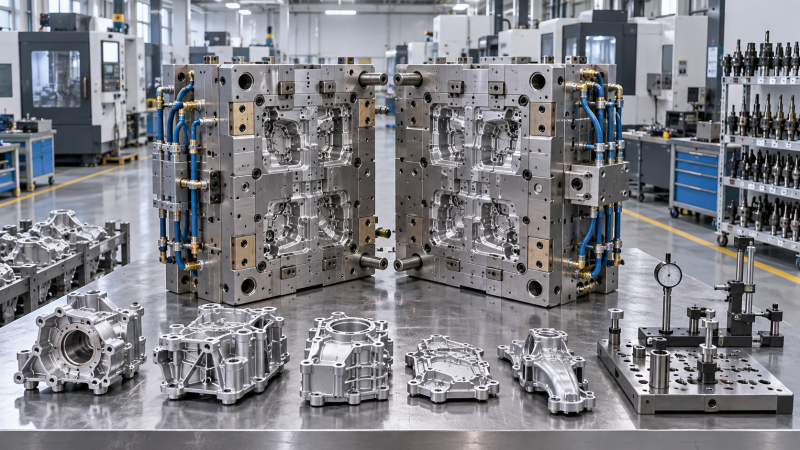
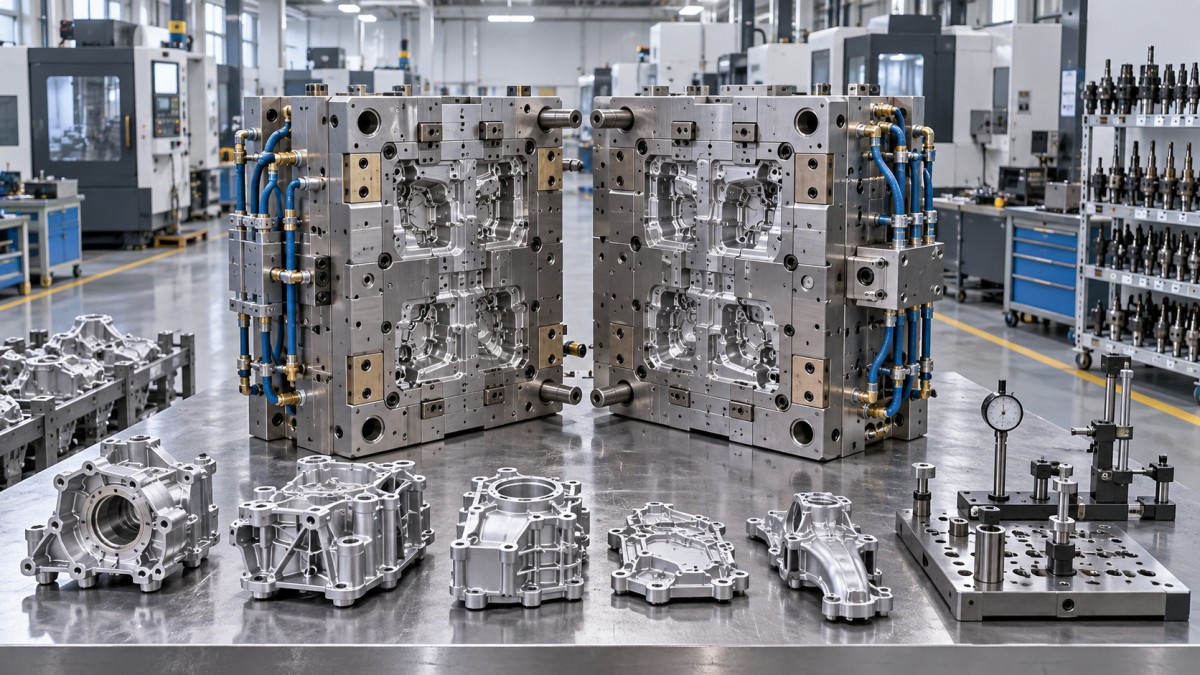
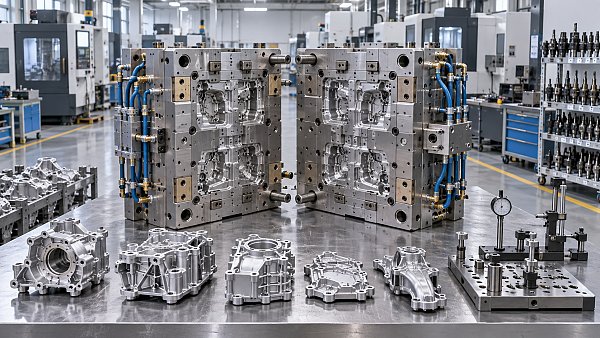
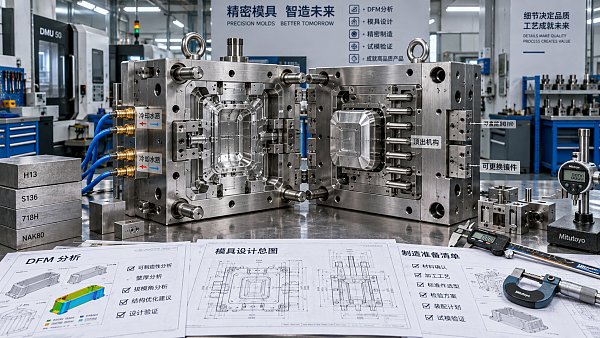
The exact scope depends on the casting process. Investment casting may involve wax injection dies, ceramic core tools, fixtures, trimming equipment, checking gauges, and dedicated machining fixtures. Pressure die-casting programs can include die blocks, inserts, slides, ejector systems, cooling circuits, overflow arrangements, trim dies, and process-specific fixtures. Sand casting may require patterns, core boxes, and inspection aids. A quotation that says only “tooling” without identifying the process and included items leaves too much room for later disagreement.
At a practical level, the charge commonly includes engineering review, tool design, raw tool steel or other tool materials, CNC machining, EDM work where required, assembly, fitting, sampling, and a defined level of trial activity. It may also include inspection fixtures, first article measurement, tool documentation, packing, and preservation. However, these elements are not automatically included. Some suppliers quote them separately; others absorb portions into the part price. A credible comparison requires normalizing the scope before comparing totals.
Tooling is also where design manufacturability becomes tangible. Parting-line placement, draft, wall-thickness transitions, fillets, undercuts, gate locations, and shrinkage allowances all affect how difficult the tool will be to build and run. A supplier that raises a tooling concern may not be adding unnecessary cost; it may be identifying a future casting defect, removal problem, or dimensional stability issue before capital is committed.
Why similar parts receive very different tooling quotations
A CAD model does not tell the full commercial story. The same nominal component can be quoted with a single-cavity tool for modest demand, a multi-cavity arrangement for volume production, or a family tool that produces related variants. Each approach changes the capital outlay, cycle-time economics, maintenance burden, and failure consequences. More cavities do not simply mean “better productivity.” They can complicate filling balance, thermal control, process setup, and repair planning.
Tool material selection is another major driver. The required balance between wear resistance, thermal behavior, polishability, corrosion resistance, and machinability depends on alloy, casting process, expected output, and local operating conditions. A quotation should not be judged by steel grade language alone. It should explain whether the material and heat-treatment approach are suitable for the stated production assumption and whether replaceable inserts are planned in high-wear areas.
Complex geometry adds cost in less obvious ways. Deep features may require long-reach machining. Internal passages may need cores or slides. Tight positional requirements can demand more sophisticated referencing. Cosmetic surfaces may require controlled texture or polishing. If a casting will be machined after casting, the tool must create stable datum-related stock conditions rather than merely produce a near-net shape. The cost of solving these issues can sit partly in tooling and partly in downstream fixtures, inspection, and machining operations.
Validation expectations also change the quotation. A supplier may include only a basic sample submission, while another includes process trials, dimensional reports, material testing coordinated to the applicable specification, capability studies where contractually required, or gauge correlation work. None of these activities should be assumed. The applicable drawing, material specification, acceptance plan, and customer quality requirements need to define what “approved tooling” means.
Read tooling cost together with the production forecast
The most useful measure is not the tooling charge alone but the expected total cost across a realistic program horizon. A low-cost tool may be the rational option if the project is uncertain or demand is limited. A more durable or higher-output tool may lower recurring cost and reduce disruption if volumes are established and replenishment is critical. The decision depends on demand confidence, product life, release schedule, design maturity, and the operational cost of a tool-related production interruption.
For evaluation purposes, separate the quotation into at least three commercial layers: non-recurring engineering and tooling; per-part casting and secondary operations; and lifecycle obligations such as maintenance, modifications, spare inserts, storage, and refurbishment. This does not require a supplier to disclose every internal cost detail. It does require enough transparency to confirm that two quotes cover the same commitment.
Hidden cost drivers worth challenging early
The phrase “tooling included” deserves careful attention. It can mean the tool is included in the part price, not that the supplier accepts unlimited maintenance or future design changes. It can also mean only the principal die is included, while trimming, inspection, or post-casting machining fixtures are excluded. The evaluator should ask for a scope matrix rather than relying on a headline statement.
Engineering changes are a frequent source of avoidable cost. Before authorizing tool manufacture, clarify the revision freeze point and the treatment of changes caused by the customer, the casting supplier, or an agreed manufacturability review. A minor drawing update may have little effect; a revised datum scheme, wall thickness, core geometry, or critical tolerance can require insert changes, rework, or a new tool section. The quotation should state the assumption, not pretend that every future change can be priced in advance.
Tool ownership and location are equally important. Ownership may transfer after payment, but that does not automatically define access rights, removal rights, storage period, insurance, confidentiality controls, or what happens when production moves. These terms are especially relevant in cross-border sourcing, where transport, customs, refurbishment capability, and the availability of compatible equipment can make a technically owned tool difficult to redeploy.
There is also a timing issue. Tool lead time should be separated from first acceptable production lead time. Tool manufacture, initial trials, corrective actions, dimensional confirmation, and any required sample approval are distinct milestones. A quotation that provides only one delivery date may conceal uncertainty in the period between completed tooling and an approved repeatable process.
A better way to compare supplier quotations
When quotations differ materially, ask each supplier to respond to the same technical and commercial brief. Include the current drawing revision, material designation, forecast by year or phase, required casting condition, post-processing scope, critical characteristics, inspection requirements, and expected approval route. Then request an explicit list of assumptions and exclusions. This makes price differences more interpretable than repeated demands for a discount.
A sound review also tests the link between tooling and the quoted unit price. If a supplier proposes lower tooling through fewer cavities, simpler inserts, or less extensive automation, ask whether cycle time, yield, labor content, or delivery capacity changes accordingly. Conversely, if higher tooling is justified by a productivity claim, request the volume basis and process assumptions behind that claim. Commercial evaluation is strongest when capital cost, recurring cost, quality risk, and capacity risk are assessed together.
This is where a multidisciplinary view is useful. G-PME examines precision die-casting and mold engineering alongside advanced CNC machining and tooling, material considerations, fluid-control applications, fastening systems, and industrial operating requirements. For a buyer, that broader perspective matters because a casting tool does not exist in isolation: it affects machining datum strategy, assembly performance, maintenance planning, and the reliability of the final industrial system.
The practical meaning of a tooling quotation
In a precision casting project, tooling cost meaning goes beyond the price of a mold or die. It is a visible expression of how the supplier intends to manufacture, control, inspect, maintain, and scale the component. The lowest charge may be right for one project, while a more comprehensive proposal may be safer for another. Neither conclusion can be reached from the tooling total alone.
Before releasing a purchase order, confirm the tool scope, design revision, quality and sample requirements, volume assumption, ownership terms, maintenance responsibilities, and first-approved-part timeline in writing. If the answers remain vague, the quotation is not yet comparable. If they are clear, the tooling charge becomes what it should be: a manageable investment decision rather than an unexplained upfront cost.
Recommended News
 What the MTTF standard for CNC means for machine reliabilityMTTF standard for CNC explained: learn how failure definitions, duty cycles, MTTR, and real-world data shape machine reliability and uptime.
 When does company formation offshore reduce cross-border tax risk?Companyformationoffshore can reduce cross-border tax risk when substance, governance, transfer pricing, and supply-chain roles align. Learn the key tests.
 How to read a measuring tape accurately for repeatable cutsMeasuringtape guide for accurate, repeatable cuts: master markings, hook movement, reference edges, kerf control, and stop-block setup.
 How to assess a CNC cutting tools manufacturer before orderingAssess a CNC cutting tools manufacturer with confidence: compare quality control, application support, trial results, supply reliability, and total machining cost before ordering.
 How often should scaffolding be inspected on active job sites?Scaffolding inspection guidance for active job sites: learn when to inspect, key safety triggers, compliance intervals, and practical controls to prevent incidents.
 What to verify when sourcing precision machining tools in EuropePrecision machining tools Europe sourcing guide: verify accuracy, ISO compliance, traceability, service coverage, and delivery resilience to reduce risk and lifecycle costs.
 When electronics require precision manufacturing at micron tolerancesPrecision manufacturing solutions for electronics deliver micron-level control, reliable inspection, and scalable quality for critical housings, thermal parts, and complex assemblies.
 When do cabletrays need corrosion protection in industrial facilities?Cabletrays need corrosion protection when exposed to moisture, chemicals, salt, washdown, or condensation. Learn how to select durable materials and protect critical industrial routes.
 What suppliers must prove for manufacturing standards compliance in Southeast AsiaManufacturing standards compliance Southeast Asia: learn what suppliers must prove, from traceable materials and calibrated tools to controlled processes, safety, and shipment records.
 What to verify in a fluid control manufacturer's quality systemFluid control manufacturer quality checks: verify traceability, testing, calibration, document control, and corrective actions to reduce risk.
 When do smart device manufacturing solutions reduce assembly errors?Smart device manufacturing solutions reduce assembly errors with closed-loop controls, vision inspection, torque verification, and traceable process data. Learn what drives reliable production.
 Import trends reshaping precision tooling supply in 2026Import trends in 2026 are reshaping precision tooling supply. Discover how to reduce landed risk, strengthen sourcing resilience, and protect production performance.
 Choosing carbide end mills for stainless steel without edge chippingCarbide end mills for stainless steel: learn how to prevent edge chipping with the right substrate, geometry, coating, coolant, and stable milling parameters.
 What contract manufacturing support should cover before sourcingIndustrial procurement support for contract manufacturing: learn what to verify before sourcing, from DFM and traceability to quality, capacity, cost control, and compliance.
 When integrated precision manufacturing solutions reduce launch delaysIntegrated precision manufacturing solutions help industrial teams prevent launch delays by aligning design, sourcing, machining, sealing, testing, and supply-chain readiness.
 Tooling cost meaning in precision casting project quotationsTooling cost meaning explained for precision casting quotations: compare scope, quality risks, lifecycle costs, and supplier assumptions to make smarter sourcing decisions.
 What is tooling cost in manufacturing for a low-volume CNC part?What is tooling cost in manufacturing? Learn how setup, fixtures, programming, and inspection affect low-volume CNC pricing—and control costs without risking quality.
 When a higher tooling price reduces long-run mold maintenance costsTooling price can reduce long-term mold maintenance costs when premium materials, precision machining, and serviceable design prevent downtime, scrap, and costly repairs.
 What a tooling fee covers before an injection mold is builtTooling fee explained: discover what it covers before an injection mold is built, from DFM and mold design to validation, ownership, and cost control.
 Where Ball Valve Torque Calculations Go Wrong in Automated LinesBall valve torque calculations can fail when pressure, media, temperature, actuator output, and mounting loads are overlooked. Discover practical sizing checks for reliable automated isolation.
 When a horizontal boring machine improves accuracy in large metal partsDiscover when a horizontal boring machine for metalworking improves accuracy in large parts, protecting critical bore alignment, stable datums, and assembly-ready results.









Search News
Popular Tags