
How material selection affects cost in a manufacturing process
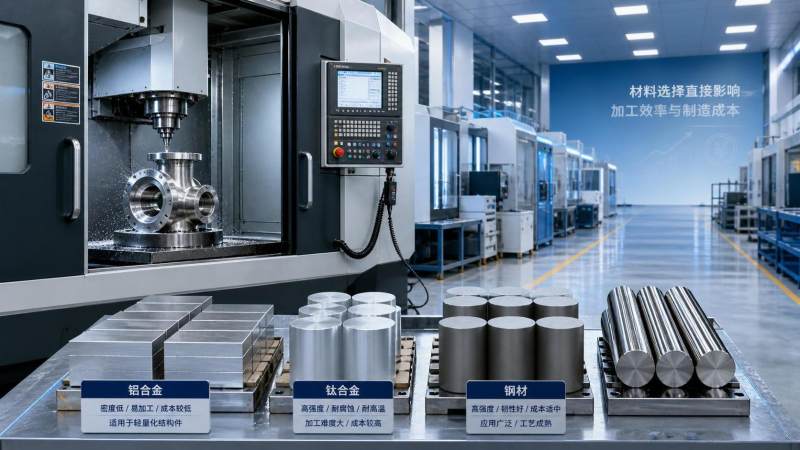
How Material Selection Affects Cost in a Manufacturing Process
Introduction: Material selection for manufacturing process is a decisive financial lever, influencing unit cost, tooling investment, energy use, cycle time, quality risk, and supply resilience.
For finance approvers, the lowest-priced material rarely produces the lowest total cost of ownership across a product's manufacturing, operating, maintenance, and replacement lifecycle.
A material decision can alter machining hours, scrap rates, tool consumption, production capacity, inventory exposure, warranty liabilities, and the capital required for process control.
This makes material approval more than an engineering specification exercise. It is a commercial decision that affects margins, cash flow, procurement strategy, and project delivery confidence.
Steel, aluminum, titanium, polymers, nickel alloys, copper alloys, and engineered composites each create different cost structures, even when components appear comparable on a purchase-order basis.
The correct question is therefore not, “Which material costs less per kilogram?” It is, “Which option delivers the required performance at the lowest verified lifecycle cost?”
Finance leaders should require a clear business case that connects material properties with measurable manufacturing outcomes, rather than accepting technical preference or supplier pricing in isolation.
That case should include direct material cost, conversion cost, expected yield, operational durability, compliance obligations, supply risk, and the cost of failure.
Why Purchase Price Is an Incomplete Cost Measure
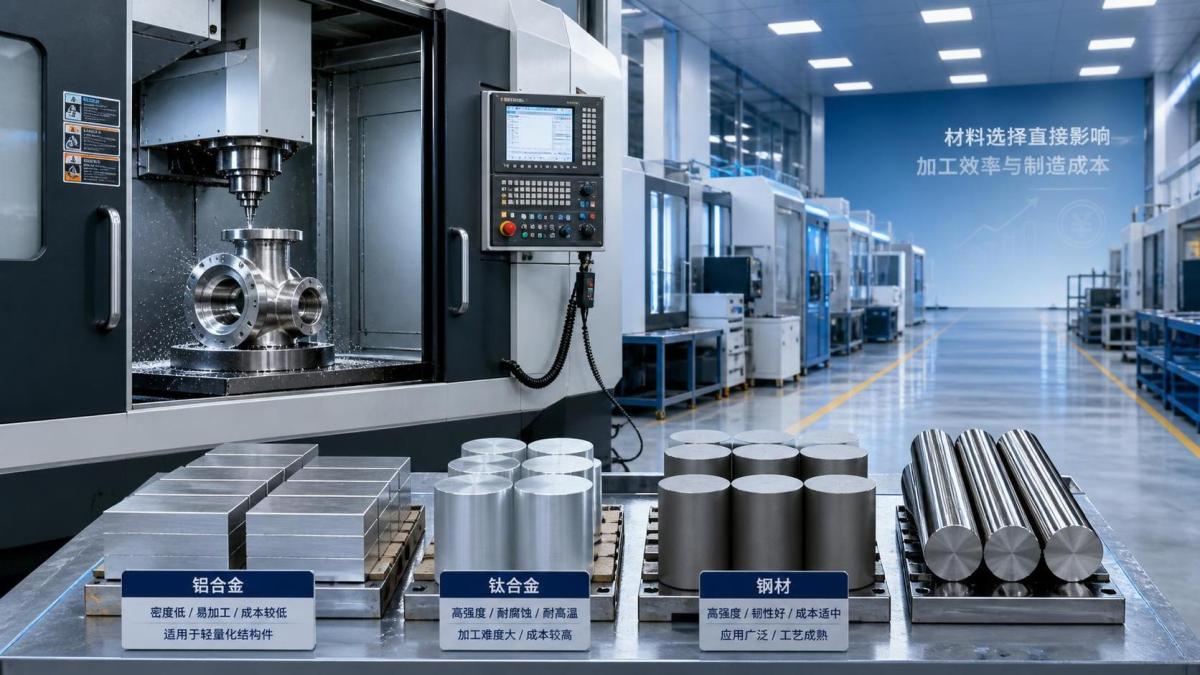
Raw material price is visible, easy to compare, and often influential during approval. However, it represents only one element of the final manufactured cost.
A lower-cost alloy may require longer machining cycles, frequent cutting-tool replacement, slower feeds, additional inspection, or more complex finishing before it meets dimensional requirements.
Conversely, a higher-priced material may reduce weight, eliminate secondary operations, improve corrosion resistance, or extend service life enough to justify its premium.
For capital-intensive manufacturing, conversion cost can exceed the cost of the starting stock. Machine time, labor, energy, maintenance, and quality control must be evaluated together.
Consider a precision-machined pump component. Stainless steel may cost more than carbon steel, yet avoid coating, reduce corrosion-related warranty claims, and improve operating reliability.
The financially preferred option depends on production volume, operating conditions, product criticality, and whether downstream failures create contractual penalties or customer downtime.
Finance approvers should ask for cost per compliant finished part, rather than cost per kilogram, meter, sheet, casting blank, or purchased bar.
This distinction exposes hidden costs that are commonly excluded from sourcing comparisons, including reject handling, rework, supplier qualification, expedited freight, and field-service exposure.
A defensible material selection for manufacturing process should calculate total landed and converted cost under realistic yield assumptions, not under ideal laboratory conditions.
Material Properties Directly Change Manufacturing Economics
Mechanical, thermal, chemical, and physical properties determine how efficiently a material can be formed, machined, cast, welded, treated, assembled, and inspected.
Hardness is a useful example. Harder materials may offer superior wear resistance, but they can increase cutting forces, shorten tool life, and require specialized tooling.
Machinability strongly affects cycle time. Materials that produce stable chips and tolerate higher cutting speeds can lower labor and machine-hour costs at scale.
Titanium provides excellent strength-to-weight performance and corrosion resistance, but its low thermal conductivity can create heat concentration during machining operations.
That heat can accelerate tool wear, lengthen cycle times, and demand advanced machining strategies. These costs must be included when comparing titanium with steel alternatives.
Aluminum may reduce machining time because it is generally easier to cut. It can also lower transportation costs where reduced component weight matters.
However, aluminum may require larger sections to achieve equivalent stiffness, additional surface treatment for corrosion protection, or design changes to manage fatigue performance.
Material form also matters. Forgings, castings, plate, bar stock, powder, and near-net-shape blanks have different utilization rates and conversion requirements.
A near-net-shape casting can reduce machining waste significantly, but its economics depend on tooling investment, porosity control, volume stability, and post-casting inspection needs.
Tooling, Scrap, and Cycle Time Often Decide the Business Case
Tooling investment is frequently underestimated during early project approval, particularly when a new material requires custom dies, molds, cutters, fixtures, gauges, or heat-treatment capability.
For high-volume die-casting or injection molding, material compatibility can determine mold life, cooling requirements, cycle time, and the likelihood of unplanned maintenance.
A material with high abrasiveness may damage tooling faster, increasing replacement frequency and interrupting production. These losses are more significant than the tooling invoice alone.
Scrap is another major financial variable. Expensive materials with poor yield can produce a higher effective part cost than moderately priced materials with stable processing behavior.
Finance teams should distinguish recoverable scrap value from true waste. Titanium chips, aluminum offcuts, contaminated mixed-metal scrap, and rejected castings have different recovery economics.
Yield calculations should include material lost during trimming, machining, setup, trial runs, inspection rejection, and production changeovers. Nominal yield assumptions can distort approval decisions.
Cycle time affects production capacity directly. A component requiring six additional machining minutes may consume substantial annual machine capacity across a large production program.
That capacity burden can trigger new equipment purchases, overtime, subcontracting, or delayed deliveries. The material decision can therefore become a capital expenditure decision.
Request scenario modeling at expected production volumes. Low-volume prototypes may favor flexible machining, while mature, high-volume programs may justify specialized tooling or near-net-shape production.
Volatile Commodity Markets Change the Timing of Material Decisions
Material selection is not static because global prices for steel, aluminum, copper, titanium, nickel, and synthetic chemical inputs can change rapidly.
Financial approval should consider both current quotation levels and the likely volatility of the selected material over the expected program duration.
A low-cost material with unstable supply may expose the business to price escalation, allocation risk, long lead times, and expensive production interruptions.
Some specialty alloys rely on concentrated global supply chains, limited mills, geopolitical trade routes, or controlled processing capacity. Qualification lead times can be substantial.
For finance approvers, single-source dependency is a measurable risk. It may require higher safety stock, stronger supplier agreements, or contingency qualification spending.
Material price adjustment clauses should be reviewed carefully. A supplier’s attractive initial quote may transfer commodity inflation entirely to the buyer after production begins.
Hedging, indexed contracts, dual sourcing, and approved alternative grades can reduce exposure, but each strategy introduces administrative, qualification, or inventory costs.
The optimal choice is often a material that is slightly more expensive today but available from qualified suppliers across several regions and processing routes.
Supply resilience should be evaluated alongside engineering performance. A component cannot create revenue when the required alloy, seal compound, or specialized lubricant is unavailable.
Compliance and Failure Risk Must Be Valued Financially
Material choices can trigger regulatory, certification, traceability, and testing requirements. These obligations affect documentation cost, lead time, supplier qualification, and audit exposure.
Aerospace, energy, medical, chemical processing, and infrastructure projects may require certified material heat records, non-destructive testing, and compliance with ISO, ASME, DIN, or JIS standards.
Using a lower-cost substitute without complete qualification can create expensive redesigns, rejected batches, project delays, insurance disputes, or contractual noncompliance.
Material integrity is especially important in pressure-retaining parts, critical fasteners, mechanical seals, pumps, molds, and precision assemblies operating under demanding conditions.
Failure costs should be assessed by probability and consequence. A low-probability failure can still justify premium material when consequences include safety events or extended customer downtime.
For example, corrosion failure in a fluid-control system may cause leakage, environmental remediation, unplanned shutdowns, replacement labor, and reputational damage beyond the component cost.
Finance approval should require engineering teams to state the failure modes avoided by each material option and quantify reasonable exposure ranges where data exists.
The purpose is not to over-specify every part. It is to reserve premium materials for applications where reliability, safety, compliance, or service access materially changes lifecycle economics.
Material selection for manufacturing process becomes stronger when risk costs are visible, documented, and linked to operating conditions rather than treated as vague contingencies.
How Finance Teams Should Compare Material Alternatives
A practical approval model starts with a functional baseline. Define the required strength, temperature range, corrosion resistance, dimensional tolerance, service life, and applicable standards.
Next, compare only technically viable materials. Including unsuitable low-cost materials in a financial comparison creates false savings and distracts decision-makers from credible alternatives.
For each viable option, calculate the raw-material purchase cost using realistic buy-to-fly ratios, yield assumptions, freight, duties, storage, and scrap recovery values.
Add conversion costs separately, including machining, molding, casting, forming, joining, surface treatment, inspection, packaging, and expected rework or rejection rates.
Then include nonrecurring expenditures such as tooling, prototype trials, process validation, supplier qualification, test programs, certification, and engineering change management.
Annualize these costs over expected production volume. This prevents a high initial tooling figure from being judged unfairly against a low-investment but inefficient production route.
Assess operational economics next. Consider energy use, maintenance intervals, replacement frequency, product efficiency, shipping weight, service labor, and expected warranty claims.
Finally, score supply-chain risk through supplier availability, lead-time variability, market concentration, price volatility, and the cost of maintaining strategic inventory.
The resulting model should show unit cost, annual cost, lifecycle cost, payback period, sensitivity to volume, and the financial effect of adverse scenarios.
Questions That Improve Approval Discipline
Finance approvers do not need to become metallurgists, but they should challenge assumptions that can materially change cost, risk, or production capacity.
Ask whether the proposed material is necessary for the actual operating environment, or whether it reflects inherited specifications, engineering preference, or excessive safety margins.
Ask whether a less expensive material creates additional coating, heat treatment, inspection, or maintenance requirements that eliminate its apparent purchasing advantage.
Ask how the component will be manufactured at planned volume. A material that works for prototypes may be economically unsuitable for serial production.
Ask which assumptions drive the cost model most strongly. Tool life, scrap percentage, machining time, commodity pricing, and warranty exposure often deserve sensitivity analysis.
Ask whether qualified alternatives exist. Multiple approved materials or suppliers can improve negotiating leverage and protect delivery commitments during market disruption.
Ask whether the supplier has validated the proposed process using representative production conditions, rather than relying on generic material data or small trial batches.
These questions improve governance without slowing technical teams unnecessarily. They focus discussions on verifiable evidence, financial consequences, and production realities.
G-PME’s technical intelligence approach supports this discipline by connecting material behavior with machining capability, industrial standards, raw-material trends, and supply-chain resilience.
Conclusion: Select Materials for Economic Performance, Not Sticker Price
Material selection affects cost in a manufacturing process because every property influences how a component is purchased, produced, qualified, delivered, and supported.
The lowest material price can become the highest-cost choice when it increases scrap, cycle time, tool wear, downtime, compliance work, warranty risk, or inventory exposure.
For finance approvers, the strongest decision is based on total cost of ownership, supported by transparent assumptions and scenario-based comparison of viable alternatives.
Evaluate direct purchase cost, conversion efficiency, tooling, yield, supply resilience, compliance, and failure consequences before approving a material specification or sourcing strategy.
When material selection for manufacturing process is treated as a lifecycle investment decision, organizations can protect margins, improve capacity utilization, and reduce avoidable operational risk.
Recommended News
 How to size extrusion equipment for a target production outputSize extrusion equipment to meet your production targets. Learn how to calculate throughput, identify line bottlenecks, and verify capacity to avoid costly sizing mistakes.
 How to assess 5-axis demand in machining center market analysisStrengthen your machining center market analysis: learn how to assess 5-axis workloads, buyer readiness, and investment costs to build credible demand forecasts and avoid costly overestimates.
 Can procurement support reduce contract manufacturing tooling delays?Discover industrial procurement support contract manufacturing teams can use to cut avoidable tooling delays, secure materials, and keep production launches on track.
 Which export insights matter when entering a new market?Export insights for new-market entry: assess demand, standards, delivered costs, supply resilience, and buyer approval paths to build a profitable expansion plan.
 How industrial technology solutions in Southeast Asia handle humid sitesIndustrial technology solutions Southeast Asia: learn how site-adapted materials, sealing, condensation control, and maintenance strategies improve reliability in humid, coastal, and high-corrosion industrial environments.
 How hospitals can size telemedicine hardware for peak virtual visitsTelemedicine hardware for hospitals: learn how to size reliable endpoints for peak virtual visits, optimize reserves, workflows, network readiness, and uptime.
 Which electronic components most affect smart actuator reliability?Electronic components that shape smart actuator reliability: evaluate power supplies, motor drives, sensors, control boards, and connectors for demanding industrial performance.
 When do reshoring CNC investment opportunities justify 5-axis capacity?Explore when reshoring CNC investment opportunities justify 5-axis capacity—reduce setups, strengthen quality control, cut supply-chain risk, and build a resilient local machining strategy.
 What compliance documents should an industrial chemicals exporter provide?Industrial chemicals exporter compliance guide: learn which SDS, CoA, transport, customs, and market-access documents help prevent delays and risks.
 How to assess a smart device manufacturing solutions factoryAssess a smart device manufacturing solutions factory with practical insights on engineering, quality, testing, supply-chain resilience, and pilot builds.
 What CE certification means for a CNC controller systemCNC controller system CE certified: learn what CE marking covers, how to verify safety, EMC, documentation, and retrofit compliance for EU machinery.
 When industrial sewing is the right fit for high-volume productionIndustrial sewing for high-volume production: learn how seam design, material control, automation, and quality planning drive reliable output and lower risk.
 How ATC tool change time data reveals hidden cycle-time lossesATC tool change time data reveals hidden cycle-time losses, separates mechanical delays from program motion, and helps manufacturers improve uptime, capacity, and delivery confidence.
 What to verify before selecting a sinker EDM machine supplierChoose a reliable sinker EDM machine supplier with confidence. Verify machining trials, electrode compatibility, automation, service support, and total ownership risk.
 How brass alloy choice affects industrial machining part tolerancesIndustrial machining brass parts: discover how alloy selection influences tolerance stability, tool wear, bore accuracy, threads, and reliable high-volume production.
 What to verify before selecting an electronics contract manufacturerElectronics manufacturing solutions: learn what to verify before choosing a contract manufacturing partner, from quality systems and testing to sourcing, traceability, and change control.
 How to check color accuracy before approving custom enamel pinsCustom enamel pins color accuracy starts before approval. Learn how to review Pantone references, proofs, plating, and samples for confident results.
 When do multilayer carbide coatings extend tool life in dry machining?Multilayer carbide coatings extend tool life in dry machining when heat, adhesion, abrasion, and edge loading are controlled. Learn how to match layers, substrates, and parameters for reliable performance.
 When occupancy controls reduce warehouse lighting energy wasteWarehouse lighting occupancy controls cut energy waste through smarter zoning, sensor placement, dimming, and commissioning. Discover practical strategies for safer, lower-cost operations.
 How to size an ESS for reducing peak-demand chargesESS sizing for peak-demand charge reduction: learn how to match power, usable energy, tariff rules, controls, and recharge strategy to lower billed demand reliably.
 How textile chemicals affect dye-house wastewater treatment costsTextile chemicals can raise dye-house wastewater treatment costs through COD, color, sludge, salt, and fouling. Discover practical ways to assess total chemical cost.
















Search News
Popular Tags