
When Is Die Casting Cheaper Than CNC Machining?

When Is Die Casting Cheaper Than CNC Machining?
Die casting becomes cheaper than CNC machining when savings on each accepted part recover the additional tooling investment before the design changes or production ends. That is the basic calculation. The harder question is whether those savings survive machining, finishing, inspection, scrap, and inventory costs.
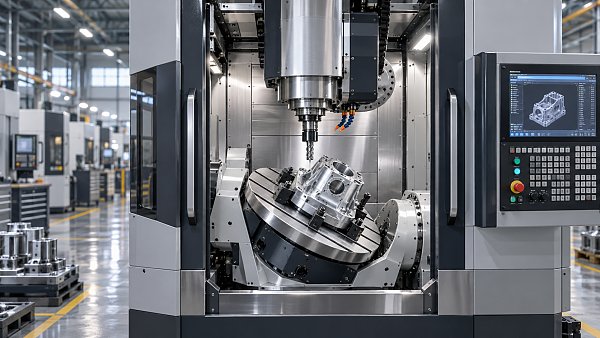
For electronic housings, the comparison is especially sensitive to material choice and functional surfaces. A cast enclosure may leave the die close to its final shape yet still need machined gasket grooves, connector interfaces, and thermal mounting pads. A CNC-machined housing avoids casting tooling but may require substantial material removal and several setups.
There is no dependable universal order quantity at which one process wins. The useful comparison is between two production routes delivering the same approved part—not between a casting price and a finished machining price.
Calculate break-even using finished, accepted parts
A simple starting point is:
Break-even quantity = additional fixed cost of casting ÷ savings per accepted part.
The numerator is the difference between the routes’ fixed costs. Include the die, slides, trim tooling, dedicated machining fixtures, sampling, and qualification where applicable. Subtract the programming, fixtures, and other nonrecurring costs that the CNC route would require anyway.
The denominator is the CNC route’s recurring cost minus the casting route’s recurring cost. Both should include material, processing, secondary operations, finishing, inspection, and the effect of production yield. If the casting route does not offer a positive saving here, increasing volume will not recover its higher fixed investment.
Use accepted units rather than shots produced or blanks machined. Rejected castings consume capacity and may already have accumulated machining or coating costs before a defect is detected. CNC parts also have scrap risk; neither route should be treated as having perfect yield.
Then test the result against realistic demand. A forecast spread across several years is not equivalent to a committed release, especially when connector layouts or circuit-board dimensions remain unsettled. Casting can show a lower theoretical lifetime cost and still be the wrong purchasing decision today.
Geometry determines how much recurring cost casting removes
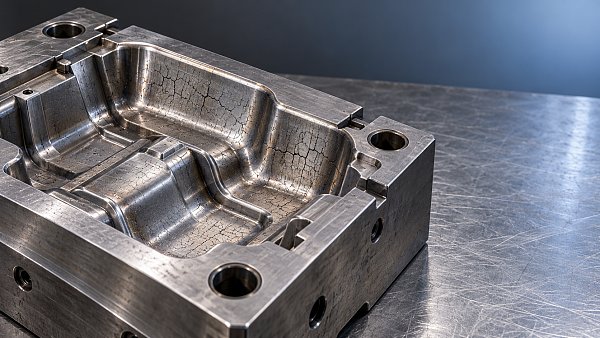
Die casting is attractive when the die replaces expensive cutting operations. Consider an enclosure with a deep internal cavity, repeated mounting bosses, reinforcing ribs, and external cooling features. Machining those features from solid stock can mean lengthy roughing cycles, restricted tool access, and considerable chip generation. Casting can form much of that geometry during each cycle.
Now consider a shallow rectangular cover with a few holes. Plate stock, an extrusion, or another near-net blank may already put CNC machining close to the finished shape. The die has less machining time to eliminate. High volume alone does not make that a strong casting candidate.
Geometry also creates casting costs. Side openings may require slides; undercuts can complicate tooling or need redesign. Abrupt changes in wall thickness can make filling, solidification, and dimensional control more difficult. Draft, parting lines, and ejector locations must be compatible with the product, not merely convenient for the toolmaker.
A design that is excellent for CNC machining is not automatically economical to cast. The strongest comparison allows a casting-specific design while keeping functional requirements unchanged.

Which materials are best for precision-machined electronic housings?
For many electronic housings, aluminum is the practical starting point because it combines low weight, useful thermal conductivity, and machinability. But “aluminum” is not a complete material specification, and switching processes usually means reconsidering the alloy.
Wrought alloys such as 6061 are common choices for machined housings. Die-casting alloys such as A380 or ADC12 are selected for casting performance and application requirements. These are not interchangeable purchasing descriptions. Strength, elongation, thermal performance, corrosion behavior, and surface appearance need evaluation for the actual alloy and condition.
Magnesium may also be worth evaluating when weight reduction justifies additional material, finishing, and supplier considerations. It should not be selected on density alone.
For heat-producing electronics, compare the thermal properties of the specified alloys, not generic material labels. For an exposed cosmetic enclosure, approve representative finished samples. Die-cast aluminum may not deliver the same anodized appearance as a wrought alloy, particularly where uniform color is important.
Tight tolerances do not rule out casting—but they change the route
The realistic choice is often CNC machining from stock versus die casting followed by CNC machining. Precision bearing seats, sealing faces, threaded ports, and connector interfaces may still need cutting after casting.
That hybrid route can remain economical. The casting removes bulk roughing work, while machining establishes selected functional features. Problems arise when a quotation assumes most surfaces remain as-cast, but the drawing effectively requires most of the housing to be machined.
Mark the drawing by function before requesting prices. Identify which surfaces locate the circuit board, compress the gasket, contact a thermal pad, or establish connector alignment. Let nonfunctional surfaces retain appropriate casting tolerances rather than applying a tight general tolerance everywhere.
Datum planning matters as much as individual dimensions. If two critical interfaces must align, machining them in a common setup may be more reliable than locating each operation from variable as-cast surfaces. That decision affects fixtures, machining allowance, and inspection—not just the tolerance note.
Sealing and finishing can reverse an attractive quote
An indoor controller cover and a sealed outdoor instrument enclosure present different manufacturing risks. In the second application, porosity can become a functional issue rather than a cosmetic concern. Machining may expose subsurface pores, including near a sealing interface.
Pressure-tight die castings are feasible, but the process and acceptance criteria must support that requirement. Depending on the design, the route may require tighter process control, leak testing, or an approved impregnation operation. These should be quoted explicitly, not discovered after tooling approval.
Define the leak-test method and acceptance limit rather than asking only for a “waterproof housing.” A finished enclosure’s performance also depends on gasket design, fasteners, joints, and cable entries. Changing the body manufacturing process does not establish enclosure-level protection by itself.
Finishing needs similar discipline. Powder coating may require masking at grounding points, threads, or mating surfaces. Electrically conductive contact areas may need a different treatment from visible exterior faces. Include preparation, masking, inspection, and possible rework in both quotations.
Separate annual volume from design stability and release size
A stable product released in predictable batches is a better casting candidate than an equally large forecast divided among frequently changing variants. Separate tools, inserts, changeovers, and qualification work can consume the expected savings.
CNC machining is often the more economical choice during product introduction because revisions usually require changes to programs, setups, or fixtures rather than a casting die. It is not change-free, but it generally leaves more room to respond to field feedback.
A staged route can make sense: machine initial production, stabilize the design, then evaluate casting. If that transition is likely, review draft, wall sections, and material alternatives early. Otherwise, the eventual conversion may become a substantial redesign.
Also check the cost of buying ahead. Larger casting batches may reduce unit prices while increasing inventory, storage, and exposure to obsolete parts. Tool maintenance, ownership, storage, and transfer rights belong in the commercial discussion, especially if supply continuity depends on one facility.
Make the quotations comparable before choosing
The cross-process perspective used by Global Precision-Machining & Engineering (G-PME) is useful here: machining, mold engineering, sealing, and material performance belong in one assessment. The cheapest forming operation is not necessarily the cheapest qualified component.
Request both routes against the same functional drawing, alloy requirements, finish specification, inspection scope, packaging, and delivery schedule. For casting, ask suppliers to separate tooling, casting, trimming, secondary machining, finishing, and testing. For CNC machining, establish the proposed stock form and setup strategy.
Then test three uncertainties: lower-than-forecast demand, a design revision before tooling payback, and additional quality operations. A casting proposal that remains attractive under those conditions has a stronger business case than one dependent on perfect volume and minimum inspection.
Die casting is cheaper when stable, repeatable geometry eliminates enough machining to repay tooling within credible production demand. CNC machining remains the better cost decision when volumes are uncertain, revisions are likely, material requirements favor wrought stock, or secondary operations consume the casting advantage. Before approving the die, confirm which costs disappear—and which merely move downstream.
Recommended News
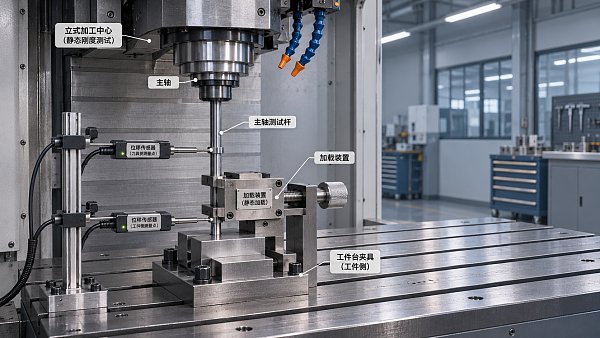
 How ISO 230-1 addresses machine tool static stiffness testingMachine tool stiffness ISO testing explained: discover how ISO 230-1 guides force-deflection measurements and supports meaningful machine comparisons.
 How to check whether a bulletproof vest is NIJ certifiedLearn how to verify bulletproofvests on the official NIJ Compliant Products List, match labels and configurations, and avoid misleading certification claims.
 How to assess a lubricants supplier's delivery reliabilityAssess a lubricants supplier with practical checks on delivery records, stock availability and contingency plans to reduce supply risks and make confident sourcing decisions.
 Americas Base Oil Weekly: High Crude and Feedstock Costs Compound Supply TightnessAmericas base oil supply is tightening as crude and feedstock costs rise. Explore the impact on Group II+ and Group III availability, pricing and purchasing.
 How to verify organic cotton baby clothes certificationShopping for organiccottonbabyclothes? Learn how to verify GOTS and OCS claims, check certificate details, and choose baby clothing with confidence.
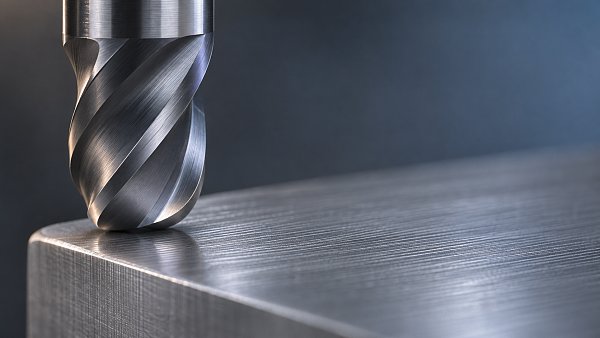
 How corner radius carbide end mills reduce edge chippingDiscover how corner radius carbide end mills reduce edge chipping, improve machining consistency, and support longer tool life with the right geometry and setup.
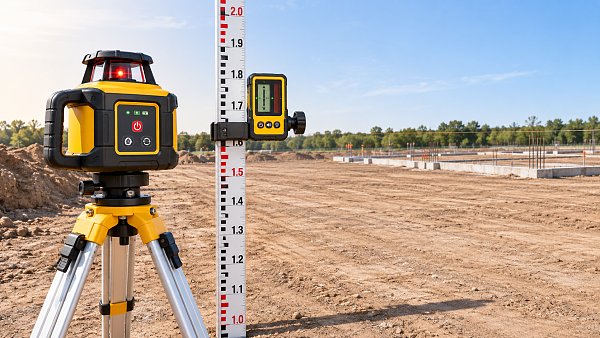
 How to choose a laser level for outdoor workCompare laserlevels for outdoor work by range, accuracy, durability, and receiver compatibility. Find the right tool for reliable results on site.
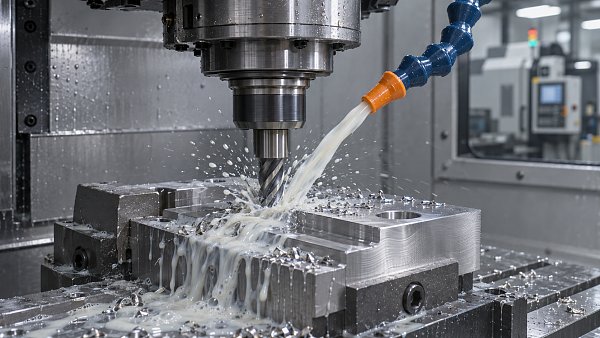
 Global Metal-Cutting Semi-Synthetic Coolant Market Forecast to Reach $1.73 Billion by 2030The semi-synthetic metal-cutting coolant market is forecast to reach $1.73 billion by 2030. Explore growth drivers and key considerations for buyers and suppliers.
 How coating thickness affects carbide tool coating costsCarbide coating cost analysis: discover how thickness affects tool prices, wear and cost per part, and learn when a premium coating is worth the investment.
 What pressure stability data should a pump supplier provide?How do I shortlist the right high-pressure pumps supplier for stable pressure? Learn which test data to request and compare bids with confidence.
 How to evaluate an industrial supplier's delivery reliabilityStrengthen industrial procurement support and supplier evaluation with practical checks for delivery records, lead times, capacity, and recovery plans.
 Stonepeak Completes 65% Castrol Acquisition; Former Shell CEO to ChairStonepeak's 65% Castrol acquisition brings new leadership as former Shell CEO Ben van Beurden becomes chair. Explore potential implications for lubricant buyers and suppliers.
 How to inspect welded iron pipes for seam defectsInspect weldedironpipes for seam defects with a practical guide to visual checks, NDT methods, acceptance criteria, and safe repair decisions.
 How to assess electronics manufacturing solutions in North America for production capacityAssess electronics manufacturing solutions North America teams can rely on. Compare capacity, supply risks and quality controls to choose the right production partner.
 How to reduce thermal cracking in die casting mold insertsReduce thermal cracking in die casting mold inserts with practical tips on temperature control, cooling, steel selection and maintenance to extend tool life.
 Can portable telemedicine devices work with poor connectivity?Telemedicine hardware portable devices can support care with poor connectivity. Discover what works offline and how to evaluate reliable remote care workflows.
 How to choose rugs and carpets for high-traffic roomsDiscover how to choose rugs and carpets for high-traffic rooms. Compare materials, construction, cleaning needs, and fit to find a practical, lasting option.
 What affects the wholesale price of EPS sandwich panels?Compare EPS sandwich panels wholesale prices and discover how core density, steel facings, order size, and delivery costs affect your project budget.
 Japan's Machine Tool Export Controls Accelerate China's Five-Axis SubstitutionJapan's machine tool export controls are accelerating China's five-axis CNC substitution. Explore the implications for buyers and supply chains.
 Why do automatic mechanical watches stop when not worn?Why do automaticmechanicalwatches stop when unworn? Discover how power reserve works, how to restart your watch, and when to seek professional help.
 Choosing high-tensile bolts for industrial fastening in EuropeIndustrial fastening Europe: Learn how to select high-tensile bolts, coatings and standards for reliable joints, accurate preload and safer assembly.










Search News
Popular Tags