
Are carbide inserts wholesale prices worth the tradeoff
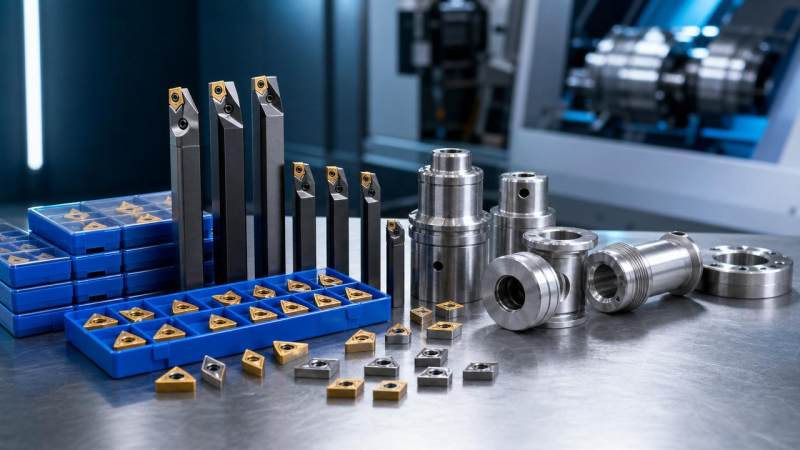
For finance approvers, carbide inserts wholesale pricing can appear attractive at first glance. Lower unit cost often looks decisive, especially under budget pressure and margin tightening.
Yet the real question is broader. Are carbide inserts wholesale offers reducing total machining cost, or simply shifting risk into quality, uptime, and inventory exposure?
Across modern manufacturing, tooling decisions now sit inside a more volatile environment. Raw material swings, supplier concentration, and tighter tolerance expectations are changing how bulk buying should be judged.
This makes carbide inserts wholesale evaluation a strategic issue, not only a purchasing exercise. Cost control matters, but stable cutting performance matters just as much.
Why carbide inserts wholesale decisions are getting more complex
The market has shifted from simple price comparison to performance-adjusted sourcing. A cheap insert becomes expensive when tool life varies between batches or edge reliability falls during long runs.
At the same time, more operations run mixed materials, tighter takt times, and unattended machining windows. In this setting, insert consistency often matters more than nominal catalog specifications.
Carbide inserts wholesale programs can still deliver value. However, the tradeoff becomes harder when supply contracts lock users into large volumes before real production data is verified.
Another signal is supplier differentiation. Some wholesale offers come from technically capable producers with process control. Others compete mainly through aggressive pricing and broad generic compatibility claims.
The strongest trend signals behind bulk insert buying
Several trends explain why carbide inserts wholesale pricing is under closer scrutiny in the general industrial sector.
What usually drives carbide inserts wholesale price gaps
Not all price differences come from scale alone. In carbide inserts wholesale markets, lower quotes often reflect differences in engineering discipline, coating control, and process traceability.
- Carbide substrate quality and grain structure stability
- Coating thickness consistency and adhesion performance
- Edge preparation accuracy for specific materials
- Insert geometry tolerance across large batches
- Testing depth under real feeds, speeds, and coolant conditions
- Packaging, traceability, and lot-level quality control
A wholesale discount can be perfectly reasonable when the supplier has scaled production efficiently. It becomes risky when low pricing depends on weaker consistency or less application-specific engineering.
Price is visible, variability is expensive
The main hidden cost in carbide inserts wholesale buying is variation. If ten inserts perform well but two fail early, the average price advantage loses meaning on the machine floor.
This is especially true in turning, grooving, and interrupted cuts. Stable edge behavior protects cycle time, dimensional control, and operator confidence.
How wholesale insert choices affect different business functions
The effect of carbide inserts wholesale sourcing spreads across several operating layers. The invoice is only one part of the outcome.
- Production: Tool life variation changes cycle stability and machine utilization.
- Quality: Edge inconsistency can affect surface finish and dimensional repeatability.
- Maintenance: Unexpected tool failure may damage holders or interrupt scheduled runs.
- Finance: Inventory carrying cost rises when order quantities exceed practical consumption windows.
- Planning: Supplier recovery becomes harder when a large lot underperforms.
This broad impact is why carbide inserts wholesale sourcing should be evaluated through total cost of ownership. Unit price matters, but not more than throughput and process confidence.
When carbide inserts wholesale pricing is genuinely worth the tradeoff
Bulk pricing becomes attractive when several conditions are present at the same time. Without them, the tradeoff often weakens.
- The insert grade is already validated in stable, repeatable applications.
- Consumption is predictable over a clear planning horizon.
- The supplier offers lot traceability and replacement support.
- Tool life data shows low variance, not only acceptable averages.
- Stored stock will not become obsolete after process changes.
In these cases, carbide inserts wholesale agreements can improve budgeting, simplify replenishment, and reduce emergency sourcing. The key is proven fit, not theoretical savings.
Where the value tends to be strongest
The best results often appear in high-volume, repeat-part environments. Standardized materials, mature cutting parameters, and controlled tool libraries support reliable wholesale use.
The weakest fit usually appears in prototype work, unstable batches, or frequent engineering changes. In those settings, flexibility can outweigh carbide inserts wholesale discounts.
What should be checked before accepting a wholesale offer
A disciplined review helps separate true value from short-term price appeal. The following points deserve attention before committing to carbide inserts wholesale volumes.
A practical way to judge the tradeoff over the next buying cycle
Instead of asking whether carbide inserts wholesale pricing is cheap, ask whether it is controllable. Good decisions combine price, reliability, and volume logic.
- Run a limited-volume trial before committing to annual quantities.
- Track tool life variance, not only average life.
- Separate inserts for stable parts from inserts for variable jobs.
- Compare carrying cost against expected unit-price savings.
- Negotiate quality clauses, lot replacement, and data-backed reviews.
This approach supports both budget discipline and machining integrity. It also aligns with the broader industrial shift toward verified performance, resilient supply decisions, and measurable production economics.
In the end, carbide inserts wholesale purchasing is worth the tradeoff only when lower price does not compromise process predictability. If savings survive testing, inventory analysis, and quality review, the model works.
The next practical step is simple. Review current insert consumption, map high-stability applications, and test carbide inserts wholesale options using batch-level performance data before expanding order size.
Recommended News
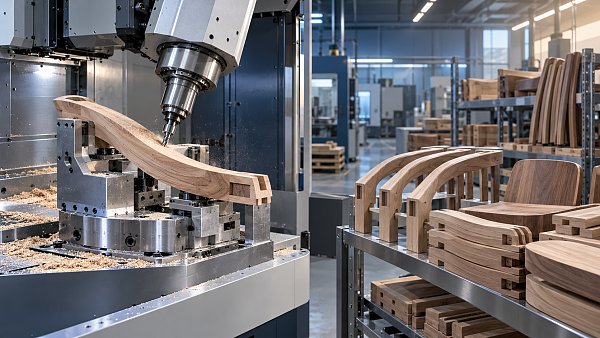
 When does 5-axis machining make sense for furniture manufacturing?Furniture manufacturing leaders: discover when 5-axis machining delivers real value through complex geometry, fewer setups, better joinery, and premium finishes.
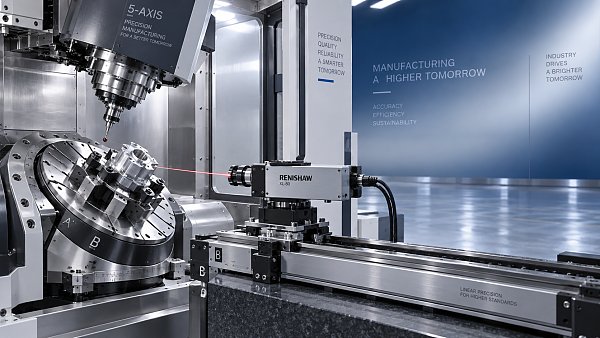
 How to read a 5-axis positioning accuracy chart before machine acceptance5 axis positioning accuracy chart guide for machine acceptance: learn to assess error, repeatability, backlash, and rotary-axis risks before production sign-off.
 When do sludge dewatering machines lower hauling costs?Sludge dewatering machines cut hauling costs when higher cake solids reduce loads, weight, and collection frequency. Explore thresholds, savings, and selection factors.
 How to verify CE certification for industrial pumps before installationIndustrial pumps CE certified? Learn how to verify declarations, documentation, hazardous-area suitability, and installation compliance before commissioning.
 How to compare a plasma cutting machine supplier before placing an orderCompare a plasma cutting machine supplier with confidence—evaluate cut quality, total cost, consumables, and after-sales support before you order.
 Which factory upgrade projects benefit most from industrial technology solutions?Industrial technology solutions factory upgrade projects deliver the most value when they remove bottlenecks, cut downtime, improve quality, and strengthen resilience. Explore high-impact priorities.
 When a high precision CNC grinding machine justifies its costDiscover when a high precision CNC grinding machine delivers real ROI through repeatable quality, lower scrap, faster verification, and controlled production.
 When do industrial lubricants for compressors need oil analysis?Industrial lubricants for compressors need oil analysis at baseline, under harsh operating conditions, and after warning signs. Learn how testing prevents downtime and protects equipment.
 How CNC controller processing speed affects cycle times in EuropeCNC controller processing speed Europe: discover how look-ahead, interpolation and CAM optimisation can cut cycle times while protecting precision and surface quality.
 What to verify before using supplier sourcing solutions in EuropeSupplier sourcing solutions Europe: verify capabilities, compliance, traceability, total cost, and supply resilience before choosing reliable industrial partners.
 When smart fabrics are reliable enough for industrial wearablesSmart fabrics for industrial wearables: learn how to validate durability, signal quality, cleaning resilience, and safe failure performance before deployment.
 How supply chain management for exporters reduces customs delaysSupply chain management for exporters helps prevent customs delays with accurate data, origin checks, importer readiness, and proactive shipment controls. Explore practical strategies now.
 What to verify before approving an OEM electronics supplierOEM electronics supplier approval checklist: verify BOM control, traceability, testing, sourcing risk, capacity, and commercial terms before committing to volume production.
 When do CNC-machined precision components require five-axis milling?Precision components CNC machined with five-axis milling deliver better access, tighter datum control, and lower setup risk. Learn when five-axis machining is the smart choice.
 What should a restaurant POS system handle during a lunch rush?restaurantPOSsystems keep lunch rushes moving with fast ordering, smart kitchen routing, flexible payments, live inventory, and reliable service controls.
 How CNC controller cycle time speed affects machining throughputCNC controller cycle time speed can raise machining throughput by sustaining feed rates on complex toolpaths. Learn how to optimize CAM, look-ahead, and machine dynamics.
 When a 4 axis vertical machining center is the better fit than 3-axisDiscover when a 4 axis vertical machining center outperforms 3-axis machining—reduce setups, improve datum control, and boost efficiency for complex multi-face parts.
 When industrial fasteners bolts need traceable material certificationIndustrial fasteners bolts need traceable material certification for critical applications. Learn what QA teams should verify to reduce risk and ensure compliance.
 How to size pump systems for cooling circuits for stable flow ratesPump systems for cooling circuits: learn how to match flow, total dynamic head, NPSH, and controls for reliable, energy-efficient cooling performance.
 When does software as a service reduce CNC data management costs?Software as a service can lower CNC data management costs by reducing IT overhead, manual reporting, and disconnected records. Discover when SaaS delivers measurable savings.
 CNC investment trends 2026: are automation upgrades taking priority?CNC investment trends 2026 reveal why automation upgrades are reshaping capacity plans. Compare robots, pallet systems, and new machines for smarter CNC growth.










Search News
Popular Tags