
CNC Lathe Manufacturer Claims That Deserve a Second Look
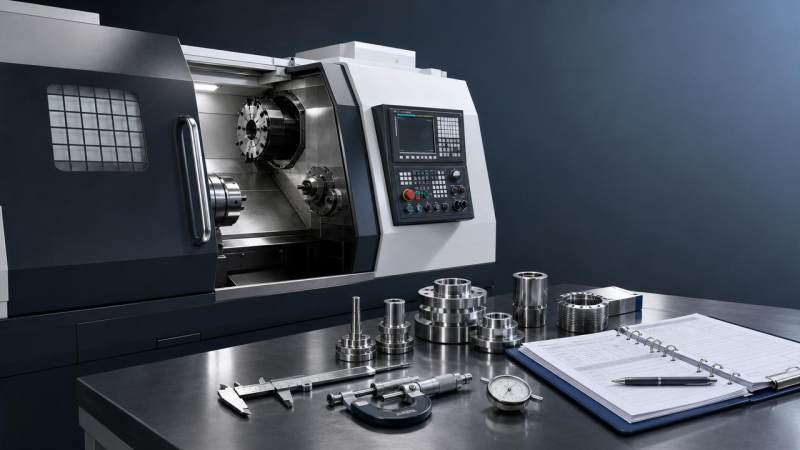
A bold claim from a cnc lathe manufacturer can shape sourcing decisions, but not every promise stands up to technical scrutiny. For business evaluators responsible for supplier selection, cost control, and long-term production reliability, a closer look is essential. This article examines which manufacturer claims deserve deeper verification and how to assess them against real performance, compliance, and operational value.
Why a checklist approach matters before trusting any cnc lathe manufacturer
For commercial evaluation teams, the biggest risk is not an obviously weak supplier. It is a capable-looking cnc lathe manufacturer whose brochures, factory tours, and sales presentations create confidence without proving repeatable results. In precision machining, small differences in machine capability, process discipline, inspection depth, and engineering support can create large differences in scrap rates, lead times, and total ownership cost.
A checklist-based review prevents evaluation from becoming too dependent on brand language such as “high precision,” “strict quality,” “fast delivery,” or “one-stop service.” These statements may be true, partly true, or true only under ideal project conditions. Business evaluators need to convert such claims into verifiable evidence: tolerance data, process capability records, material traceability, maintenance logs, customer case history, and response commitments tied to service levels.
This is especially relevant in a cross-industry sourcing environment, where procurement teams may compare suppliers serving automotive, energy, industrial equipment, medical, and engineered components. A cnc lathe manufacturer that performs well in one sector may not be equally strong in another if compliance, documentation, surface finish, or batch consistency requirements differ.
First-pass claims that deserve a second look
Before moving to quotations or sample approval, review these common claims with disciplined skepticism. The goal is not to reject a cnc lathe manufacturer quickly, but to verify whether the promise is supported by measurable proof.
- “We can hold tight tolerances consistently.” Ask whether the statement refers to one sample, a pilot lot, or full production. Request Cp/Cpk data, gauge calibration records, and examples across comparable materials and geometries.
- “We have advanced equipment.” New machines alone do not ensure output quality. Confirm machine brand, spindle hours, preventive maintenance routines, thermal compensation, and process setup control.
- “We offer fast lead times.” A short quoted lead time may not include tooling, first article approval, subcontracted finishing, customs delay, or production queue changes. Ask for a lead-time breakdown.
- “Our quality system is certified.” Certification is useful, but it does not automatically prove project-level control. Verify what standards are in scope and how they are applied on the shop floor.
- “We are a one-stop machining solution.” Many suppliers coordinate outside processes. That can work well, but only if supplier control, traceability, and accountability remain clear.
- “We serve global top customers.” Customer logos create trust, yet they may reflect minor orders, historical projects, or non-comparable parts. Ask for anonymized case details that match your risk profile.
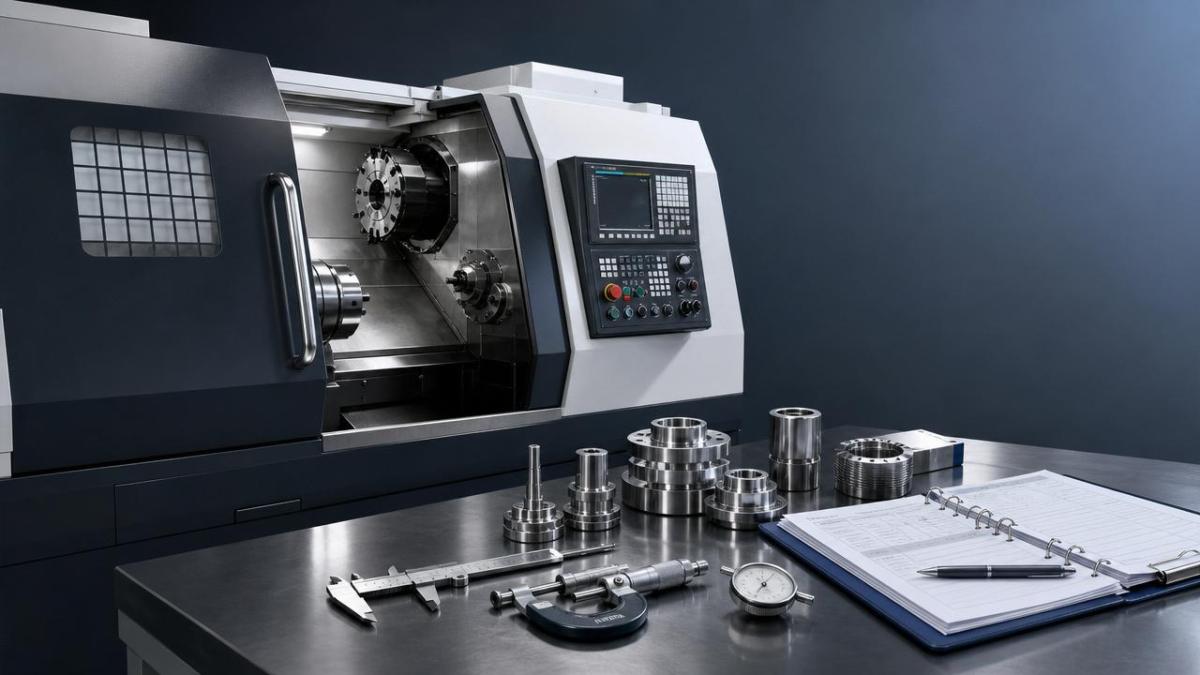
Core evaluation checklist for a cnc lathe manufacturer
1. Confirm capability beyond brochure language
Start with the technical fit. A cnc lathe manufacturer may genuinely produce excellent turned parts, yet still be unsuitable for your dimensions, material family, or finish requirements. Prioritize machine envelope, turning diameter and length, live tooling capability, bar feeder integration, sub-spindle operations, and support for secondary milling or drilling if part complexity requires it.
Also compare claimed precision against part function. If your assembly depends on concentricity, roundness, thread integrity, and surface roughness under load, ask how these are measured in-process and at final inspection. Capability should be linked to your actual drawing characteristics, not only to generic micron-level claims.
2. Check process control, not just final inspection
A reliable cnc lathe manufacturer does not rely on sorting defects at the end. Strong suppliers build process control into setup approval, tool wear monitoring, offset management, coolant condition, and operator work instructions. Ask whether they use first-piece inspection, in-cycle checks, Statistical Process Control, and documented reaction plans when dimensions drift.
For business evaluators, this point matters because process control reduces hidden costs: emergency sorting, line stoppage, expedited remake, customer returns, and unstable planning. The cheaper quote often becomes expensive when process discipline is weak.
3. Verify material integrity and traceability
Material substitution or incomplete traceability can undermine part performance, especially in sectors using alloy steels, stainless grades, aluminum series, brass, titanium, or engineering polymers. A cnc lathe manufacturer should be able to show material certificates, heat or lot traceability, segregation methods, and controls for mixed-stock prevention.
If heat treatment, coating, plating, passivation, or grinding is outsourced, confirm how traceability continues across each step. Business evaluators should not assume that a good machining process automatically means robust chain-of-custody control.
4. Measure delivery reliability in realistic terms
A cnc lathe manufacturer may promise fast delivery, but the more useful metric is on-time delivery under normal variation. Request historical delivery performance, expediting frequency, average deviation from committed schedule, and the supplier’s method for handling engineering changes. If overseas logistics are involved, include packaging standards, export documentation accuracy, and contingency planning for customs or port disruption.
5. Review engineering responsiveness
For many sourced parts, value is created before production starts. A strong cnc lathe manufacturer should be able to suggest tolerance optimization, cycle-time reduction, feature simplification, material alternatives, or fixture improvements without compromising function. Engineering responsiveness is often the difference between a transactional vendor and a strategic manufacturing partner.
A practical comparison table for business evaluators
Use the following decision framework when comparing one cnc lathe manufacturer against another. It helps convert sales claims into an evidence-based shortlist.
Additional checks by sourcing scenario
When the project is cost-driven
If price competitiveness is the top priority, do not stop at piece price. Compare setup cost, tooling life assumptions, scrap allowance, packaging standards, and the supplier’s policy on nonconforming replacements. A lower-cost cnc lathe manufacturer may still be the right choice if process repeatability is stable and communication is disciplined. However, if low price depends on thin inspection coverage or unstable subcontracting, the savings may disappear quickly.
When the project is precision-critical
For components with demanding dimensional relationships, focus on thermal control, machine maintenance, fixture strategy, metrology depth, and operator skill retention. Ask the cnc lathe manufacturer how they manage difficult materials, long slender parts, burr-sensitive features, and cumulative tolerance stacks across multiple operations.
When the project requires scale-up
Prototype success does not guarantee mass-production success. If you expect volume growth, check whether the cnc lathe manufacturer has duplicate machines, trained backup operators, stable raw material supply, and documented process transfer methods. Capacity redundancy is often overlooked until demand spikes.
Commonly overlooked risk points
- Revision control gaps: An experienced cnc lathe manufacturer can still ship to an outdated drawing if engineering change procedures are weak.
- Hidden subcontract dependency: Surface finishing, heat treatment, or grinding may be critical quality steps outside the supplier’s direct control.
- Inconsistent sampling logic: Good first articles may not reflect regular lot inspection discipline.
- Currency and raw material exposure: Pricing can shift quickly if the quotation lacks a clear adjustment mechanism.
- Single-person communication risk: If only one sales contact understands the project, continuity can fail during escalation or absence.
Execution advice: what to prepare before supplier review
To evaluate a cnc lathe manufacturer efficiently, internal preparation matters as much as supplier screening. Business evaluators should align procurement, engineering, quality, and operations around a common evidence package. At minimum, prepare current drawings, annual volume estimates, critical-to-quality features, target lead time, required standards, packaging expectations, and the commercial model for pilot versus serial production.
Then ask each supplier to respond in the same format. Standardized supplier response templates make comparison much clearer. They also reveal where a cnc lathe manufacturer is precise, transparent, and technically mature versus where claims remain vague.
FAQ for evaluating a cnc lathe manufacturer
Is ISO certification enough to qualify a supplier?
No. It is a positive baseline, but a cnc lathe manufacturer should also demonstrate process control, measurement discipline, traceability, and corrective-action effectiveness relevant to your part family.
What is the fastest way to test whether claims are reliable?
Use a controlled pilot part with known critical features, required documentation, and a realistic timeline. Then compare quote accuracy, DFM quality, sample consistency, and communication speed from each cnc lathe manufacturer.
Should a larger cnc lathe manufacturer always be preferred?
Not always. A larger supplier may offer broader capacity, but a focused manufacturer can outperform on responsiveness, specialization, and technical ownership if your requirements match its strengths.
Final decision guide and next-step questions
The best way to assess a cnc lathe manufacturer is to treat every strong claim as a starting point, not a conclusion. Business evaluators should prioritize evidence over presentation, process stability over isolated sample quality, and total operational value over initial unit price. A supplier that documents capability clearly, explains limitations honestly, and responds with engineering discipline usually creates lower long-term risk than one that promises everything.
If your team is ready to move forward, the most useful next questions are practical ones: Which tolerances are routinely maintained in production, not just in sample runs? What inspection plan applies to critical dimensions? Which processes are outsourced, and how is traceability preserved? What lead time assumptions depend on material availability or subcontract capacity? How are quotation validity, change control, and nonconformance response handled? Asking these questions early will help you identify whether a cnc lathe manufacturer is simply persuasive or genuinely ready for dependable long-term cooperation.
Recommended News
 When solar inverters should be replaced instead of repairedSolar inverters: learn when recurring faults, obsolete parts, safety damage, and rising lifecycle costs make replacement smarter than repair.
 What to verify before choosing a first aid kits distributorFirst aid kits distributor checklist: verify compliance, traceability, expiry control, replenishment, and multi-site delivery before choosing a reliable supplier.
 How mold engineering design reduces warpage in thin-wall partsMold engineering design reduces thin-wall part warpage through balanced gating, cooling, packing, and ejection for stable, production-ready precision.
 What to audit at a CNC machine tools factory before approving a supplierCNC machine tools factory audit guide: verify machining accuracy, metrology, traceability, workforce skills, and capacity resilience before approving a precision supplier.
 When does a horizontal boring machine with ATC justify its cost?Discover when a horizontal boring machine with ATC delivers ROI through faster setups, higher uptime, lower labor costs, and reliable capacity growth.
 How office acoustics affect speech privacy in open-plan workspacesOffice acoustics shape speech privacy in open-plan workspaces. Discover practical strategies for reducing distractions, protecting sensitive conversations, and improving focus.
 Can AI in precision engineering for aerospace applications improve defect detection?AI in precision engineering for aerospace applications improves defect detection through smarter inspection, traceable workflows, and early process-drift alerts. Explore proven deployment strategies.
 Using a supplier capability evaluation framework to screen CNC suppliersSupplier capability evaluation framework for screening CNC suppliers: verify quality, traceability, capacity, and resilience to select reliable partners.
 When supplier capability evaluation services reduce tooling project riskSupplier capability evaluation services help reduce tooling project risk by verifying technical fit, quality controls, capacity, and delivery readiness before costly delays occur.
 How can a trade network help distributors enter new regional markets?Trade network strategies help distributors enter regional markets with verified partners, local insights, technical fit, and reliable logistics for faster, lower-risk growth.
 Does private label manufacturing contract assembly reduce launch risk?Private label manufacturing contract assembly can reduce launch risk with proven quality systems, traceability, supplier validation, and scalable production control.
 When do e-readers make sense for a distraction-free work library?E-readers for focused work libraries: discover when they improve deep reading, technical document review, security, and distraction-free research workflows.
 How a precision milling center factory controls part-to-part consistencyDiscover how a precision milling center factory achieves reliable part-to-part consistency through controlled tooling, workholding, traceability, and in-process inspection.
 Which CNC manufacturing investment drivers matter before capacity expansionCNC manufacturing investment drivers: evaluate demand, automation, workforce readiness, and lifecycle ROI before expanding capacity. Build resilient, profitable growth.
 When CNC turning is the right fit for precision machining servicesPrecision machining services: discover when CNC turning delivers superior concentricity, surface finish, and cost control for critical rotational parts.
 When ozone generators are suitable for odor control in commercial spacesOzone generators for commercial odor control: learn when controlled treatment is appropriate, how to protect people and materials, and why source removal comes first.
 How to select mechanical seals for mixers handling abrasive slurriesMechanical seals for mixers: learn how to select durable seal arrangements, face materials, and support systems for abrasive slurry service.
 How supply chain analysis supports risk management before disruptions occurSupply chain analysis risk management helps businesses detect hidden dependencies, assess recovery time, and act early to protect operations before disruptions occur.
 How to evaluate a smart switchable glass OEM before project approvalSmart switchable glass OEM evaluation guide: verify panel buildability, visual performance, controls integration, quality evidence, and delivery support before project approval.
 When should an interior design distributor expand into commercial projects?Interior design distributor guide: discover the key readiness signals, risks, and practical steps for expanding confidently into profitable commercial projects.
 Where to find industrial application guidance resources for process upgradesIndustrial application guidance resources help technical evaluators validate process upgrades with standards, supplier data, trials, and lifecycle insights.














Search News
Popular Tags