
Can soil management cut fertilizer waste in 2026?
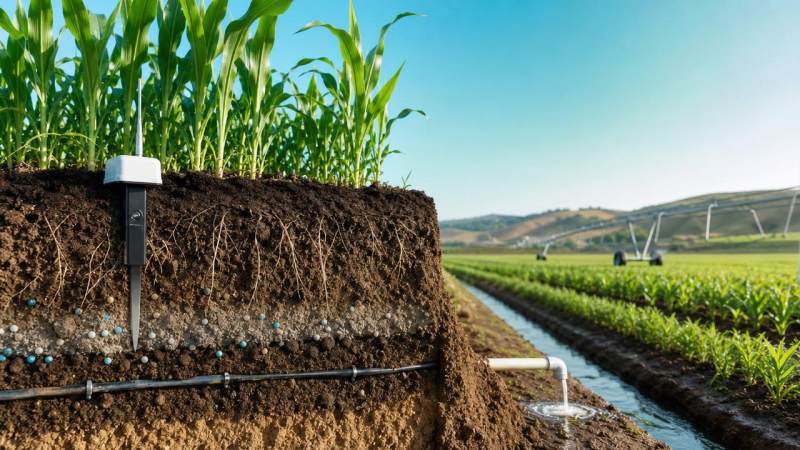
In 2026, fertilizer waste is no longer just an agronomic concern—it is a project efficiency, cost control, and compliance issue.
For project managers overseeing agricultural infrastructure, industrial land development, or sustainability-driven engineering programs, soil management offers a practical route to reduce nutrient loss.
By combining field data, testing protocols, drainage planning, and precision application systems, teams can turn soil conditions into actionable intelligence.
Yes—if soil management is treated as an engineering control, not a farming add-on
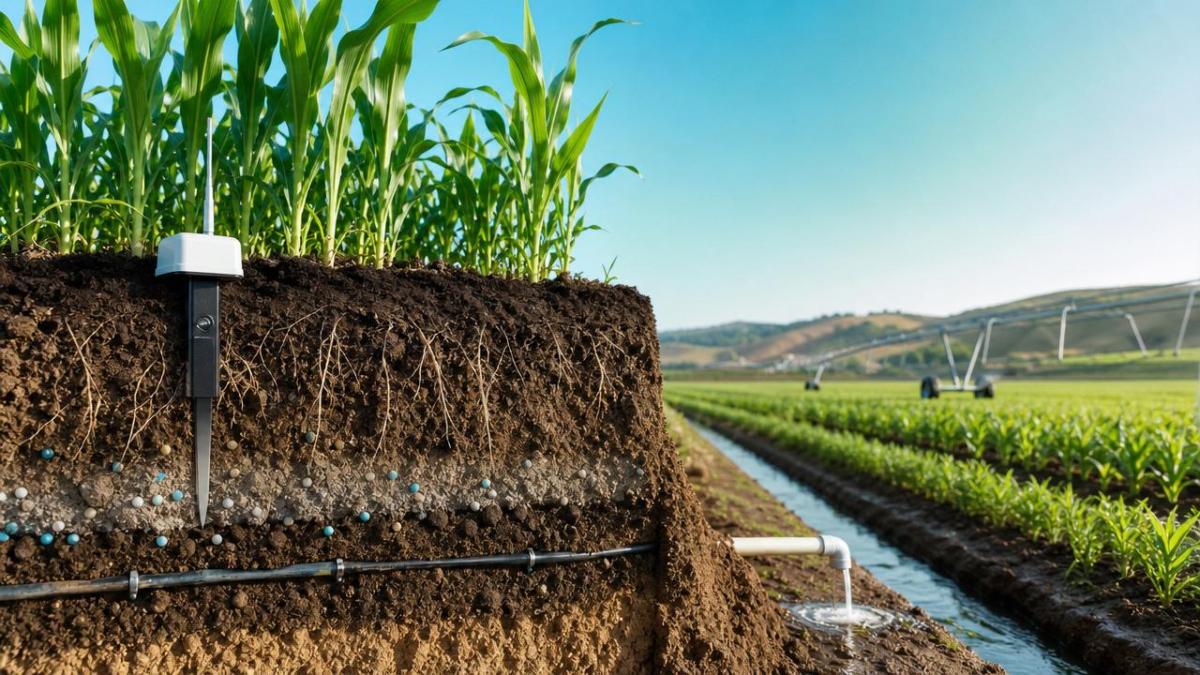
Soil management can cut fertilizer waste in 2026, but only when it is integrated into project planning, procurement, and performance monitoring.
For project managers, the issue is not whether nutrients matter. The issue is whether fertilizer inputs are being applied without sufficient site intelligence.
Waste occurs when nutrients are placed where roots cannot access them, when water moves them away, or when timing misses crop demand.
Good soil management reduces those failure points by improving nutrient retention, drainage behavior, biological activity, and application accuracy across the project area.
The strongest business case is simple: fertilizer savings are only one part of the return. Risk reduction is often more valuable.
Lower runoff exposure, better yield consistency, fewer corrective applications, and cleaner compliance records can protect budgets and schedules throughout the season.
What searchers really want to know about fertilizer waste
Most users searching this topic are not looking for a textbook definition of soil. They want a decision framework.
They need to know whether soil management is worth funding, how fast benefits appear, and what measurements prove improvement.
Project leaders also want to distinguish practical interventions from broad sustainability claims that sound useful but cannot be audited.
In that context, soil management becomes a method for controlling nutrient pathways across a defined site, contract, or operating asset.
The key question is not “Can we use less fertilizer?” It is “Can we apply the right amount with less uncertainty?”
That distinction matters because aggressive fertilizer reduction without soil intelligence can damage output, while targeted reduction can improve financial and environmental performance.
Where fertilizer waste actually happens on projects
Fertilizer waste is usually caused by mismatches between soil condition, water movement, application equipment, and crop uptake timing.
On many managed sites, fertilizer programs are still based on standard rates rather than measured variability across soil zones.
One field may contain compacted areas, sandy sections, low-organic-matter zones, and poorly drained pockets requiring different nutrient strategies.
Applying one uniform rate across those areas creates over-application in some zones and under-performance in others.
Nitrogen losses often occur through leaching, volatilization, denitrification, or runoff, depending on moisture, temperature, pH, and soil structure.
Phosphorus waste is frequently linked to erosion and surface runoff, making grading, cover, and drainage design critical project considerations.
Potassium and micronutrient inefficiencies may arise from poor cation exchange capacity, pH imbalance, compaction, or inadequate organic matter.
For engineering teams, this means fertilizer waste is not only an input problem. It is also a site design and operations problem.
The soil management levers with the strongest ROI
The first high-return lever is soil testing that produces management zones, not just average values for a whole property.
Zone-based testing helps managers identify where fertilizer should be reduced, increased, delayed, or paired with soil amendment work.
The second lever is pH correction, because nutrient availability often collapses when pH moves outside the optimal range.
Liming or acidification strategies may deliver more usable nutrition from existing applications, reducing the need for repeated fertilizer purchases.
The third lever is organic matter improvement, especially where sandy or degraded soils lose nutrients quickly after rainfall or irrigation.
Compost, cover crops, residue retention, and bio-based amendments can improve water retention and nutrient holding capacity over time.
The fourth lever is compaction management, which is often underestimated in project planning and heavy equipment scheduling.
Compacted soil restricts roots, reduces infiltration, increases runoff, and prevents crops from accessing nutrients already present below the surface.
The fifth lever is drainage and irrigation control, because water is the main carrier of lost nutrients.
When drainage, irrigation timing, and fertilizer application are planned together, nutrient movement becomes more predictable and easier to manage.
How precision systems make soil management measurable
In 2026, soil management is increasingly tied to precision application, sensor data, and digital reporting systems.
Variable-rate technology allows fertilizer to be adjusted according to mapped soil zones, crop demand, and historical performance.
Soil moisture sensors can prevent fertilizer applications before heavy irrigation or rainfall events that may cause nutrient loss.
Remote sensing and crop imagery help identify stress patterns, although they should be validated with soil and tissue testing.
Project managers should avoid treating software dashboards as proof by themselves. Data quality still depends on sampling discipline and calibration.
The best systems connect field measurements with equipment logs, fertilizer invoices, weather data, and yield or biomass outcomes.
This creates an auditable chain from soil condition to application decision, operational execution, and performance result.
For large projects, that chain can support sustainability reporting, client assurance, regulatory documentation, and supplier performance evaluation.
What project managers should evaluate before investing
Before approving a soil management program, managers should define the economic baseline and the operational problem being solved.
Useful baseline data includes fertilizer spend, application frequency, yield variability, runoff incidents, soil test history, and rework costs.
If those numbers are unavailable, the first investment should be a diagnostic phase rather than a full technology rollout.
A practical diagnostic phase may include grid or zone sampling, compaction assessment, infiltration testing, drainage review, and application equipment inspection.
Managers should also identify whether the main loss pathway is leaching, runoff, volatilization, erosion, or poor uptake.
Different loss pathways require different interventions, and choosing the wrong solution can create a convincing but ineffective program.
For example, variable-rate spreading will not solve nutrient loss caused primarily by severe compaction and surface runoff.
Likewise, improved drainage may not reduce waste if fertilizer timing remains disconnected from weather and crop uptake windows.
Building a soil management plan that works in the field
A strong plan begins with site segmentation, separating the project area into zones with similar soil, slope, drainage, and productivity characteristics.
Each zone should have clear sampling points, nutrient targets, amendment recommendations, and operational constraints for machinery access.
The next step is to align fertilizer timing with crop demand and weather risk, not simply with fixed calendar dates.
Split applications, controlled-release products, inhibitors, and fertigation can reduce waste when they match local soil and climate conditions.
Procurement teams should specify fertilizer products based on agronomic function, handling requirements, compatibility, and loss-risk reduction.
For engineering-led projects, equipment calibration should be documented as carefully as any mechanical commissioning procedure.
Application errors from spreader settings, nozzle wear, pump inconsistency, or inaccurate flow control can erase gains from good soil analysis.
Finally, the plan needs accountability. Assign responsibility for sampling, data review, application approval, field execution, and post-season evaluation.
Compliance and ESG value are becoming more important
Fertilizer waste increasingly affects permitting, watershed protection, carbon reporting, and corporate sustainability commitments.
Nutrient runoff can trigger reputational, regulatory, and contractual problems, especially near sensitive waterways or public infrastructure projects.
Soil management helps demonstrate that the project has applied a defensible process to reduce avoidable nutrient loss.
That does not mean every project needs advanced automation. It means every project needs evidence-based nutrient control.
For ESG reporting, soil data can strengthen claims related to resource efficiency, water protection, emissions reduction, and land stewardship.
However, reporting should be conservative. Managers should avoid overstating benefits unless they have before-and-after data and consistent methods.
The most credible programs report input reduction, soil condition changes, runoff-risk indicators, productivity outcomes, and limitations.
This balanced approach is more useful to investors, clients, auditors, and engineering partners than broad sustainability language.
Expected results and realistic payback timelines
Some benefits from soil management can appear within one season, particularly when pH correction, timing, or application accuracy improves.
Other gains, such as organic matter improvement and deeper structural recovery, may require several seasons of consistent management.
Project managers should separate short-term fertilizer efficiency from long-term soil resilience when estimating return on investment.
Short-term savings may come from reduced over-application, fewer rescue treatments, better equipment calibration, and improved application timing.
Long-term value may come from stronger root systems, reduced erosion, improved moisture buffering, and more stable production outcomes.
A realistic business case should include fertilizer cost reduction, avoided compliance exposure, productivity improvement, labor efficiency, and data value.
The return is strongest where fertilizer costs are high, soil variability is significant, runoff risk is visible, or yields are inconsistent.
On highly uniform, well-managed sites, the return may be smaller, though monitoring can still protect against future degradation.
Common mistakes that reduce the value of soil management
The first mistake is relying on one soil test and assuming conditions remain stable across seasons.
Soil is dynamic, and nutrient availability changes with rainfall, crop removal, compaction, biological activity, and amendment history.
The second mistake is purchasing precision equipment before defining the agronomic and operational problem.
Technology improves decisions only when it is connected to reliable data, trained operators, and clear management rules.
The third mistake is reducing fertilizer too quickly to meet cost or sustainability targets without monitoring crop response.
Such reductions may create hidden yield losses that outweigh input savings and undermine stakeholder confidence.
The fourth mistake is ignoring civil works, traffic patterns, and drainage because they seem outside the fertilizer budget.
In reality, those engineering factors often determine whether nutrients remain in the root zone or leave the site.
A practical decision checklist for 2026 projects
Project managers can use a simple checklist before approving a soil management investment or revising fertilizer strategy.
First, confirm whether current fertilizer rates are based on recent, zone-specific soil testing rather than legacy assumptions.
Second, identify the main nutrient loss pathway and verify it with field observation, laboratory data, or hydrological review.
Third, check whether drainage, irrigation, compaction, and erosion controls support the fertilizer plan or undermine it.
Fourth, confirm that application equipment can deliver the required rate accurately and that calibration records are maintained.
Fifth, define the metrics that will prove success, including input reduction, productivity, runoff risk, soil health, and cost variance.
Sixth, assign ownership across agronomy, engineering, procurement, and operations so the plan does not become a disconnected report.
If these points are addressed, soil management becomes a controllable project system rather than a vague environmental initiative.
Conclusion: soil management can cut waste, but discipline determines the result
Soil management can cut fertilizer waste in 2026, especially when projects face high input costs, variable soils, or compliance pressure.
Its value comes from reducing uncertainty: knowing where nutrients are needed, when they are vulnerable, and how they should be applied.
For project managers, the strongest approach combines testing, zone planning, drainage control, calibrated equipment, and measurable performance indicators.
The goal is not simply to use less fertilizer. The goal is to make every unit of fertilizer more accountable.
When soil management is planned with engineering discipline, it supports cost control, environmental performance, and operational reliability together.
That makes it one of the most practical strategies for reducing agricultural input waste while protecting project outcomes in 2026.
Recommended News
 How to assess five-axis machine tool thermal stability data in Latin AmericaReview machine tool thermal stability data Latin America suppliers provide. Discover how to assess five-axis drift, ISO 230-3 tests, and site conditions for smarter purchasing decisions.
 How thick should fiberglass acoustic insulation be for wall cavities?Fiberglass acoustic insulation: how thick should it be? Explore 3.5- and 5.5-inch wall cavity options, tested STC requirements, and installation tips to avoid costly mistakes.
 How bending radius affects the service life of high-voltage cablesProtect highvoltagecables from bending damage. Discover how bend radius affects service life, which installation limits matter, and practical checks for lasting reliability.
 How to size extrusion equipment for a target production outputSize extrusion equipment to meet your production targets. Learn how to calculate throughput, identify line bottlenecks, and verify capacity to avoid costly sizing mistakes.
 How to assess 5-axis demand in machining center market analysisStrengthen your machining center market analysis: learn how to assess 5-axis workloads, buyer readiness, and investment costs to build credible demand forecasts and avoid costly overestimates.
 Can procurement support reduce contract manufacturing tooling delays?Discover industrial procurement support contract manufacturing teams can use to cut avoidable tooling delays, secure materials, and keep production launches on track.
 Which export insights matter when entering a new market?Export insights for new-market entry: assess demand, standards, delivered costs, supply resilience, and buyer approval paths to build a profitable expansion plan.
 How industrial technology solutions in Southeast Asia handle humid sitesIndustrial technology solutions Southeast Asia: learn how site-adapted materials, sealing, condensation control, and maintenance strategies improve reliability in humid, coastal, and high-corrosion industrial environments.
 How hospitals can size telemedicine hardware for peak virtual visitsTelemedicine hardware for hospitals: learn how to size reliable endpoints for peak virtual visits, optimize reserves, workflows, network readiness, and uptime.
 Which electronic components most affect smart actuator reliability?Electronic components that shape smart actuator reliability: evaluate power supplies, motor drives, sensors, control boards, and connectors for demanding industrial performance.
 When do reshoring CNC investment opportunities justify 5-axis capacity?Explore when reshoring CNC investment opportunities justify 5-axis capacity—reduce setups, strengthen quality control, cut supply-chain risk, and build a resilient local machining strategy.
 What compliance documents should an industrial chemicals exporter provide?Industrial chemicals exporter compliance guide: learn which SDS, CoA, transport, customs, and market-access documents help prevent delays and risks.
 How to assess a smart device manufacturing solutions factoryAssess a smart device manufacturing solutions factory with practical insights on engineering, quality, testing, supply-chain resilience, and pilot builds.
 What CE certification means for a CNC controller systemCNC controller system CE certified: learn what CE marking covers, how to verify safety, EMC, documentation, and retrofit compliance for EU machinery.
 When industrial sewing is the right fit for high-volume productionIndustrial sewing for high-volume production: learn how seam design, material control, automation, and quality planning drive reliable output and lower risk.
 How ATC tool change time data reveals hidden cycle-time lossesATC tool change time data reveals hidden cycle-time losses, separates mechanical delays from program motion, and helps manufacturers improve uptime, capacity, and delivery confidence.
 What to verify before selecting a sinker EDM machine supplierChoose a reliable sinker EDM machine supplier with confidence. Verify machining trials, electrode compatibility, automation, service support, and total ownership risk.
 How brass alloy choice affects industrial machining part tolerancesIndustrial machining brass parts: discover how alloy selection influences tolerance stability, tool wear, bore accuracy, threads, and reliable high-volume production.
 What to verify before selecting an electronics contract manufacturerElectronics manufacturing solutions: learn what to verify before choosing a contract manufacturing partner, from quality systems and testing to sourcing, traceability, and change control.
 How to check color accuracy before approving custom enamel pinsCustom enamel pins color accuracy starts before approval. Learn how to review Pantone references, proofs, plating, and samples for confident results.
 When do multilayer carbide coatings extend tool life in dry machining?Multilayer carbide coatings extend tool life in dry machining when heat, adhesion, abrasion, and edge loading are controlled. Learn how to match layers, substrates, and parameters for reliable performance.
















Search News
Popular Tags