
When smart machine tool integration reduces unplanned downtime
Downtime falls when integration changes the maintenance decision, not just the data volume
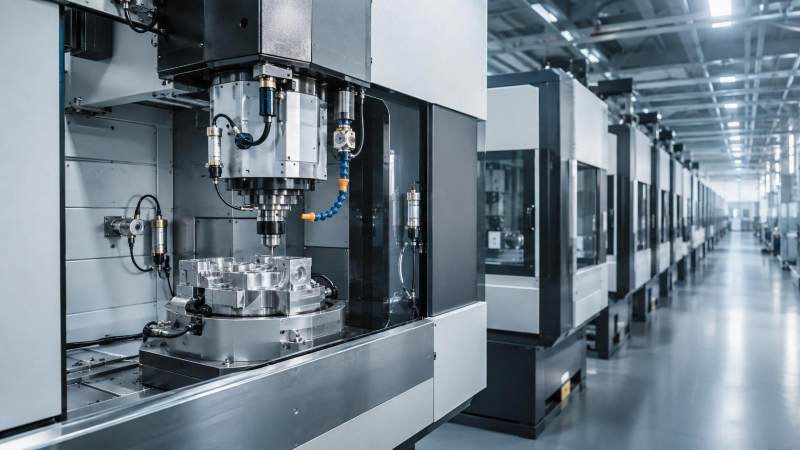
Smart machine tool integration reduces unplanned downtime when it gives operations and maintenance teams enough context to act before a developing condition becomes a line-stopping event. Connecting a CNC machine to a dashboard alone will not achieve that result. The integration must link machine-state data, process conditions, alarm history, maintenance records, and production priorities in a form that helps people distinguish a real failure signal from normal variation.
For enterprise leaders, the question is therefore less about whether connected machines are more advanced than standalone assets. It is whether the plant has recurring downtime modes that can be detected early, diagnosed quickly, and addressed within an available maintenance window. Where those conditions exist, smart machine tool integration can protect throughput, delivery performance, and part quality. Where they do not, a broad connectivity project may produce more notifications without materially improving uptime.
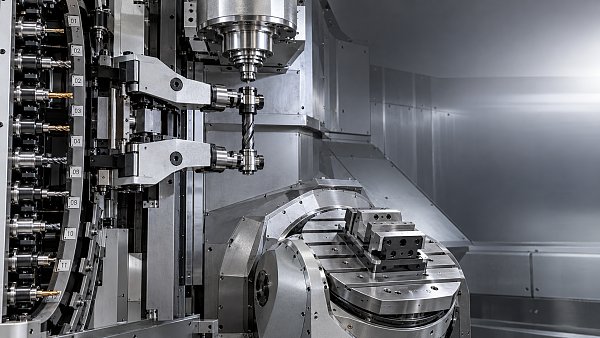
This distinction matters most in high-mix, high-value, or capacity-constrained machining environments. A spindle issue on a lightly loaded machine may be inconvenient. The same issue on a five-axis center producing a constrained aerospace component, a mold cavity approaching a delivery deadline, or a critical part on a transfer line can create a chain of schedule, quality, and expediting costs far beyond the repair itself.
Which downtime problems are suitable for early intervention?
Not every stoppage is predictable, and not every predictable condition is worth integrating around. The strongest applications begin with a small number of failure modes that have an identifiable operating signature and a meaningful business consequence. Spindle bearing degradation, abnormal axis load, rising vibration, coolant delivery instability, lubrication faults, thermal drift, chip-conveyor overload, and repeated tool-break events are common examples. They leave different traces in machine signals, but each can often be seen developing before the machine stops completely.
A useful test is to ask four practical questions:
- Does the failure mode recur often enough to justify focused monitoring?
- Does it create a detectable change in load, temperature, vibration, pressure, power draw, cycle behavior, alarms, or dimensional performance?
- Can a technician take a defined action once the condition is identified?
- Can that action be scheduled before the failure compromises production, safety, or quality?
If the answer to the last two questions is unclear, more data will have limited value. For example, a machine may report a rising spindle temperature, but the signal becomes useful only when it is compared with spindle speed, ambient conditions, machining duration, tooling load, and the machine's own normal operating range. A fixed alarm threshold applied across unlike machines can create false alerts and prompt unnecessary intervention.
Tool-related downtime deserves similar care. Monitoring a tool's cycle count is simple, but cycle count alone may not reflect actual cutting exposure. Material batch variation, interrupted cuts, toolpath complexity, coolant condition, cutter geometry, and workholding stability can all change tool life. An integrated system becomes more valuable when it combines tool identity, program operation, cutting parameters, measured load, and inspection feedback. That allows the plant to manage tool replacement as a controlled production decision rather than reacting after breakage damages a workpiece or fixture.
The operational layer matters more than the connection layer
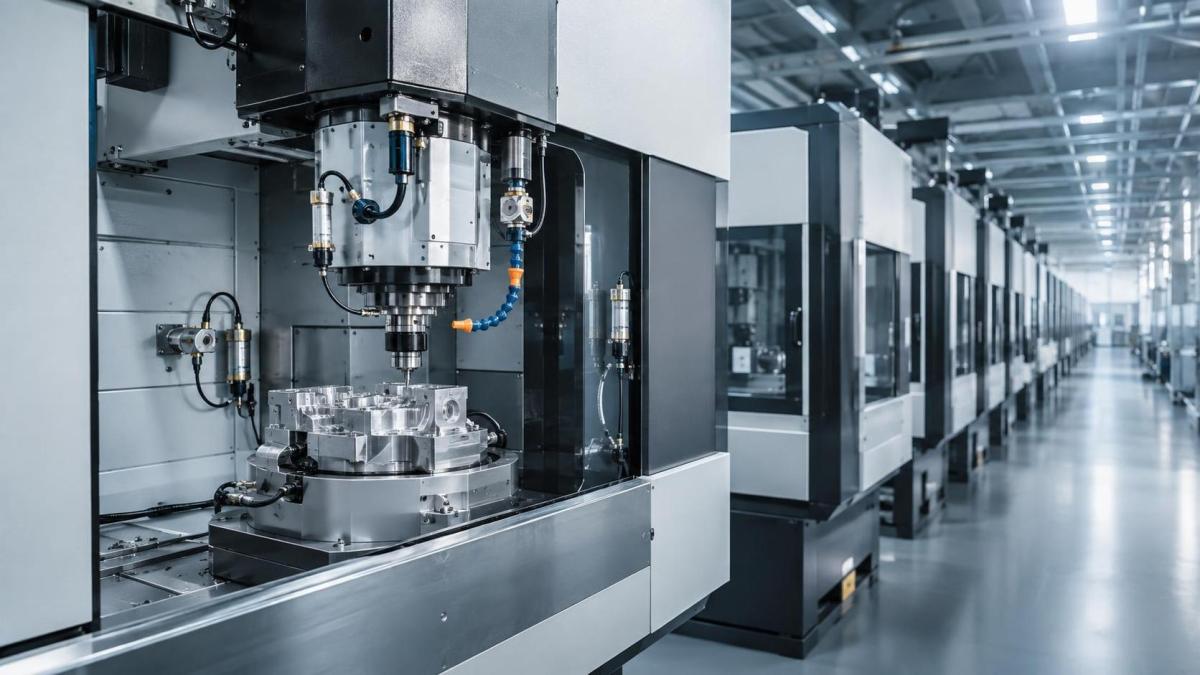
Many integration initiatives concentrate on extracting data from machine controls. That is necessary, but it is only the first layer. The greater challenge is creating a reliable operational model around the data. A machine controller may expose hundreds or thousands of tags, while only a small portion supports a useful maintenance or capacity decision. Collecting every available signal increases storage, configuration, cybersecurity, and interpretation burdens without automatically improving fault detection.
A practical architecture usually connects several layers:
- The machine control provides machine state, alarms, cycle status, axis and spindle information, and selected process values.
- Additional sensors may cover conditions that the control does not observe adequately, such as vibration, coolant pressure, hydraulic behavior, air quality, or environmental temperature.
- Manufacturing execution, scheduling, and work-order systems establish what the machine is expected to produce and how a disruption affects delivery.
- Maintenance systems record asset history, planned work, spare parts, repair actions, and recurring failure patterns.
- Quality and inspection data indicate whether machine behavior is beginning to affect dimensional capability before a formal breakdown occurs.
The value comes from correlating these layers. A repeated servo alarm has one meaning if it occurs during rapid movement with no load, another if it appears only during a certain high-force roughing operation, and another if it follows a maintenance event. A connected environment should make those patterns visible to the people responsible for the next decision.
For this reason, integration should preserve the asset hierarchy and production context. Each signal needs an unambiguous association with a machine, subsystem, program or operation where appropriate, and timestamp. Inconsistent names, duplicate machine identifiers, manual spreadsheet mappings, and clock mismatches often undermine analysis long before an advanced analytics model is considered.
When smart integration is likely to reduce unplanned downtime
The business case is strongest when downtime has both a clear cost and a limited recovery path. This often includes plants where capacity is tight, where replacement machines cannot easily absorb work, or where a shutdown disrupts a sequence of downstream operations. It also applies to facilities with expensive fixtures, long setup times, scarce skills, or high scrap exposure. In these settings, even a modest improvement in failure detection can have an outsized operational effect because recovery is difficult.
Integration is also well suited to fleets with repeated equipment families. Similar machines operating under comparable conditions can provide a broader baseline for normal behavior, while recurring alarm sequences and parts usage can reveal common weak points. Standardized integration across a machine family can simplify training, maintenance planning, and spare-parts decisions.
There are less favorable cases. A machine with highly intermittent usage may not generate enough operating data to establish a dependable pattern quickly. A workshop with inconsistent job documentation may struggle to compare loads and cycle behavior across unrelated work. A legacy asset may expose only limited control data, requiring retrofit sensors and careful validation before its condition can be inferred. These are not reasons to rule out integration, but they are reasons to set narrower expectations and choose the monitoring scope carefully.
Plants should also avoid treating connectivity as a substitute for basic maintenance discipline. Persistent coolant contamination, poor electrical grounding, worn workholding, undocumented parameter changes, and delayed preventive work will not be corrected by a dashboard. Digital signals can make these weaknesses more visible; they do not eliminate the need for ownership, competent diagnosis, and timely execution.
From alerting to actionable maintenance
The practical failure point in many projects is alert fatigue. If operators and technicians receive frequent warnings without a clear escalation path, the system quickly becomes background noise. A useful alert should answer three questions: what has changed, how certain is the condition, and what action is expected now?
For a critical spindle, the action may be an inspection during the next planned idle period, followed by a decision on repair based on vibration trend and surface-finish evidence. For declining coolant pressure, it may be a filter check, pump inspection, or confirmation that a specific fixture is not restricting flow. For excessive axis load, the response may involve checking lubrication, ballscrew condition, machine alignment, or a program and tooling change. The correct response depends on the failure mechanism, so alerts need operating procedures attached to them.
Condition scores can help prioritize work, but they should not obscure the evidence. Maintenance teams need access to the underlying trend, alarm sequence, machine state, and recent interventions. A single opaque score can be useful for executive reporting, yet technicians must be able to determine whether the score reflects a genuine mechanical change, a sensor issue, a program change, or a temporary production condition.
Production planning must be included in this workflow. Predicting a likely fault is useful only when a maintenance window can be created without turning a manageable condition into an avoidable delivery failure. Connected scheduling can help identify the least disruptive intervention point, reserve qualified labor, verify spare availability, and redirect work where capacity permits. This is where smart machine tool integration begins to influence uptime rather than simply document it.
Implementation choices that determine whether the system is trusted
Trust is built through data quality and governance, not through interface design. Before scaling, a manufacturer should establish how machine status is classified, which alarms are meaningful, who owns tag definitions, and how changes to programs, controls, sensors, or network configurations are recorded. A clean pilot on one cell can become misleading if these rules are absent when the system reaches multiple plants or machine brands.
Cybersecurity also belongs in the uptime discussion. Machine tools increasingly sit at the boundary between operational technology and enterprise information systems. Remote access, unmanaged edge devices, direct controller connections, and poorly segmented networks can introduce production risk while attempting to improve visibility. Integration designs should define access privileges, authentication, patching responsibilities, network segmentation, and a response path for connection failures. The objective is controlled data exchange that does not weaken control-system reliability.
Vendor interoperability deserves equal scrutiny. A platform that works well with one CNC generation but requires extensive custom work for another can lock the organization into high expansion costs. Decision-makers should examine data ownership, export options, protocol support, retention requirements, integration with maintenance and production applications, and the effort required to add a new asset. The right question is not whether a supplier has a long feature list. It is whether the required data can be used and maintained across the plant's actual equipment estate.
Start with a bounded use case and define success in operational terms. This might be fewer repeat stoppages from a known subsystem, shorter time to diagnose an alarm sequence, more planned interventions replacing emergency repairs, or improved recovery from a recurrent tool-related interruption. The baseline should separate true equipment failure from planned maintenance, material shortages, operator waiting, program optimization, and quality holds. Otherwise, an apparent uptime gain may simply reflect a change in downtime coding.
What leaders should ask before expanding the program
Before moving from a pilot to a broader deployment, leaders should look for evidence that the integration has changed decisions at the point of work. Are technicians acting on earlier signals? Are production planners using condition information to create maintenance windows? Are recurring disruptions being classified more accurately? Can the plant explain which alerts were useful, which were ignored, and why?
A further test is whether the system has improved precision protection as well as availability. Many machine failures emerge first as small changes in repeatability, finish, tool wear, or cycle stability. When condition monitoring is combined with quality signals, the organization can avoid the false choice between running equipment until it fails and stopping it without adequate evidence.
Smart machine tool integration earns its place when it turns machine behavior into disciplined maintenance and production choices. The most credible programs do not begin by promising a fully autonomous factory. They begin with a constrained set of costly interruptions, establish reliable signals around those problems, and build a response process that makes early intervention operationally possible.
Recommended News
 Why do pH meters give unstable readings in metalworking coolants?Unstable pHmeters in metalworking coolants? Learn how to identify probe fouling, verify calibration, and improve sampling for reliable readings before costly coolant adjustments.
 Aluminum vs. titanium for lightweight parts with equal stiffnessEngineering materials comparison: lightweight alloys aluminum and titanium face off at equal stiffness. Discover how geometry, loading, and cost guide the best choice for lighter parts.
 Which engineering materials hold tight tolerances as temperatures change?Explore our engineering materials comparison by tolerance to learn how Invar, ceramics, steel, and aluminum handle temperature changes—and find the right fit for precision designs.
 John Crane to Showcase Emissions and Downtime Reduction Technologies at ADIPEC 2026John Crane at ADIPEC 2026: Explore technologies targeting lower emissions and compressor downtime, and discover what reported savings could mean for your operations.
 When does precision engineering machining need a 5-axis machine?Discover when precision engineering machining needs 5-axis capability. Compare 3+2 and simultaneous machining to improve tool access, control costs, and choose the right process.
 How to check clinical validation of wholesale blood pressure monitorsSourcing blood pressure monitors wholesale? Learn how to verify clinical studies, registry listings, cuff coverage, and model identity before approving your next bulk order.
 How much lithium battery storage do you need for solar energy?Lithium battery storage for solar energy: learn to calculate capacity, account for losses, and check backup power. Avoid costly sizing mistakes and find the right system for your needs.
 11th CIMSS Conference in Wuxi to Focus on Metalworking Fluid Industry UpgradesExplore the 11th CIMSS Conference in Wuxi, October 22–23, 2026, for insights into metalworking fluid innovation, industrial cleaning and cost control to support industry upgrades.
 Can solid-state battery breakthroughs scale to mass-produced EVs?Solid-state battery breakthroughs for electric vehicles: can they scale? Explore manufacturing yield, pack costs, and real-world performance to uncover what stands between lab success and mass production.
 Can digital manufacturing improve competitiveness by cutting lead times?Explore digital manufacturing competitiveness: learn how shorter lead times, smarter scheduling, and connected quality data can help win orders and cut costs without compromising quality.
 How to size a hydraulic press for forging large steel componentsSize a hydraulic press for forging large steel components with confidence. Learn how to assess forming force, working speed, stroke, and capacity limits to avoid costly selection errors.
 Aerospace Actuator Maker 7958 Joins Emerging Stock Market on October 22Aerospace actuator maker 7958 joins the Emerging Stock Market on October 22, 2026. Explore its precision motor technology and growth plans for drones and robotics.
 How to calculate payload for industrial robots removing molded partsSize industrial robots for molded-part removal with confidence. Learn to calculate total payload, center of gravity, inertia, and extraction loads to avoid overloads and optimize cycle times.
 When do automated CNC cell systems pay off for 5-axis machining?When do automated cnc cell systems pay off for 5-axis machining? Discover how demand, unattended reliability, and total costs shape ROI—and build a stronger investment case.
 When is industrial procurement support worth the cost for tooling?When is industrial procurement support worth the cost for tooling? Discover how to compare total costs, assess supplier risk, and build a clear break-even case before you invest.
 How to assess a mold manufacturer's cooling design expertiseAssess a mold engineering manufacturer's cooling expertise with key checks for thermal simulations, circuit flow, and mold trials. Learn what evidence to demand before approving your supplier.
 How to vet OEM mold suppliers in a manufacturing directoryUsing a manufacturing directory with OEM suppliers? Learn how to vet mold makers, verify capabilities, compare quotes, and define acceptance criteria to reduce sourcing risk.
 Desma USA Introduces DataHub and Molding Technology to Improve Production EfficiencyExplore Desma USA’s DataHub, valve-gate and cavity-pressure technology to see how these innovations could enhance process control and improve molding production efficiency.
 How energy costs shape manufacturing competitiveness in the Middle EastManufacturing competitiveness Middle East guide: discover how energy costs, efficiency, and reliable power shape factory margins—and make smarter site and equipment investments.
 Choosing a compatible automatic tool changer for 5-axis CNCs in EuropeAutomatic tool changer Europe guide: find the right fit for your 5-axis CNC. Compare tool limits, collision clearance, safety and local support to avoid costly mistakes.
 When is a Swiss-type lathe worth the investment in Europe?Swiss type lathe Europe: is it worth the investment? Compare ownership costs, verified savings and payback scenarios to build a stronger business case before you buy.





Search News
Popular Tags