
Belotti Examines 5-Axis CNC Machining in Shipbuilding
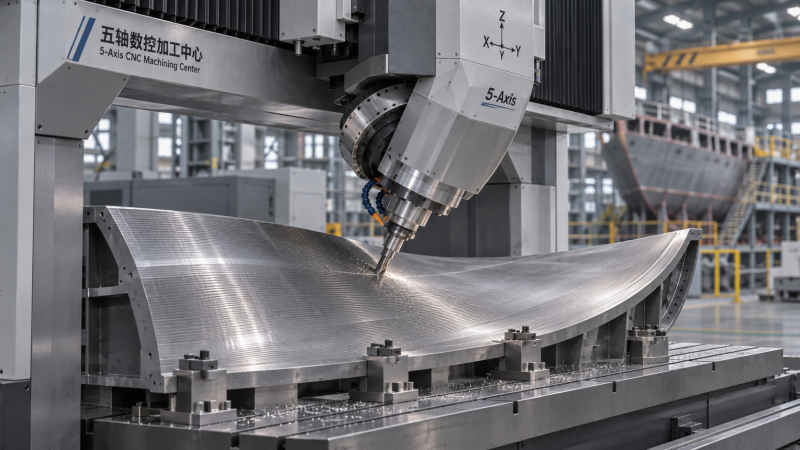
On November 24, 2026, CNC equipment manufacturer Belotti published a technical article examining how 5-axis CNC machining centers can be used in shipbuilding, from digital design through hull production. The article discusses the potential precision and efficiency advantages of coordinated five-axis machining for complex hull components.
The publication focuses attention on a practical manufacturing question: how can digital design information be carried through to the production of complex marine components? Its discussion presents five-axis machining as a way to address that question, while leaving the scale of its effects dependent on the application.
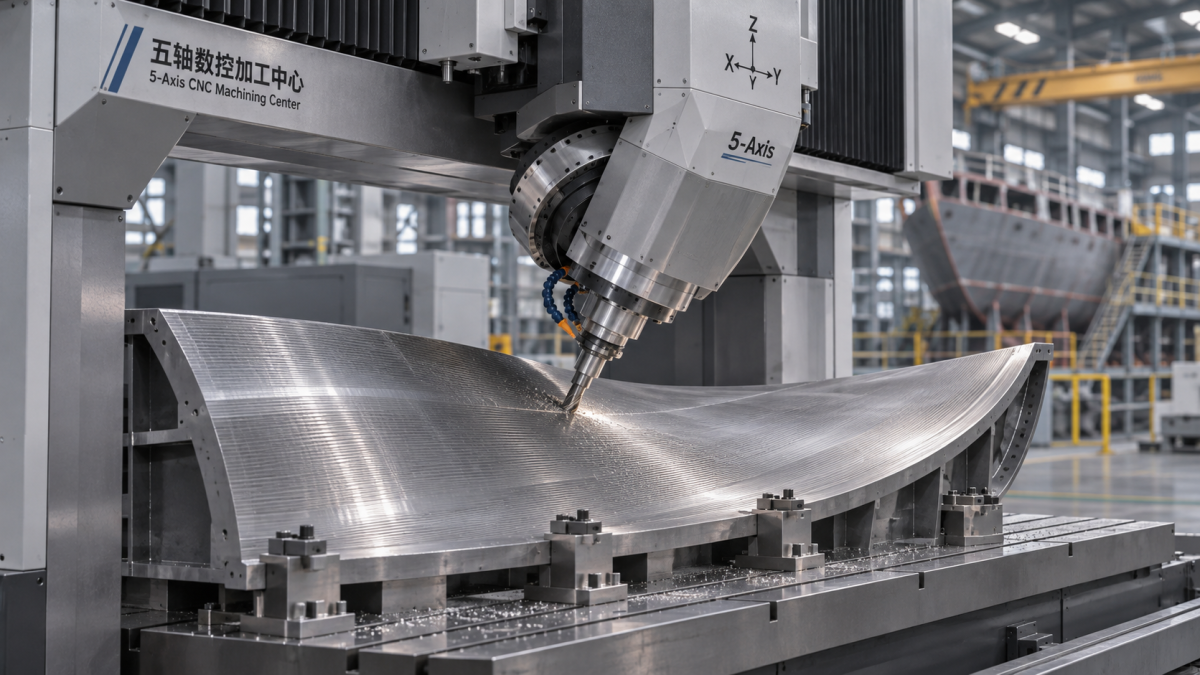
From digital design to a machined component
The connection between design and production is central to Belotti’s discussion. A digital design defines the intended shape of a component; machining must then produce that shape with the precision required for its use. When a hull component has complex geometry, the relationship between the designed surface and the finished part becomes especially important.
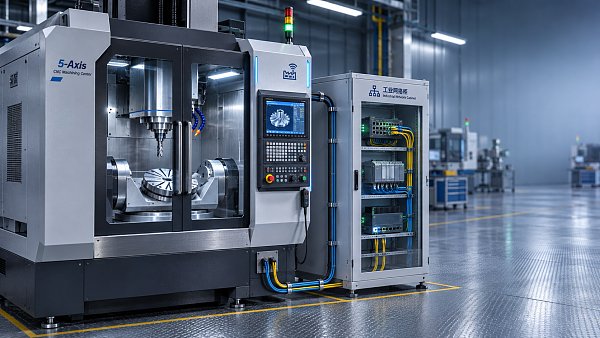
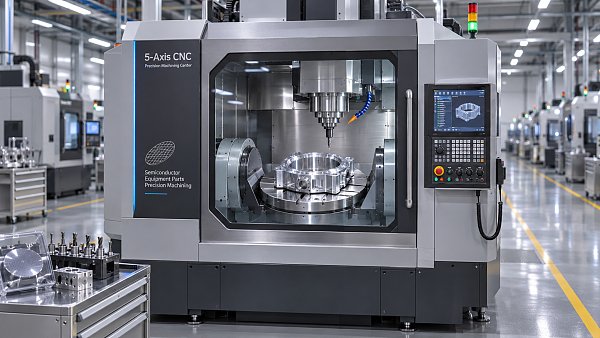
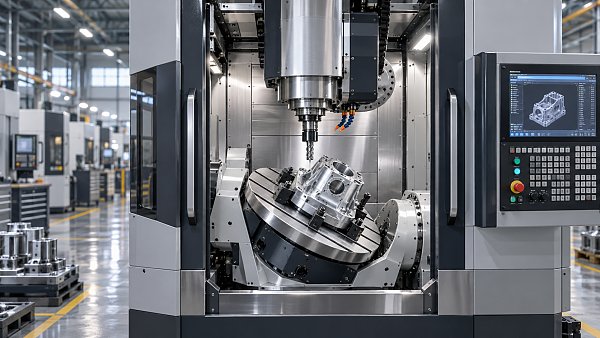
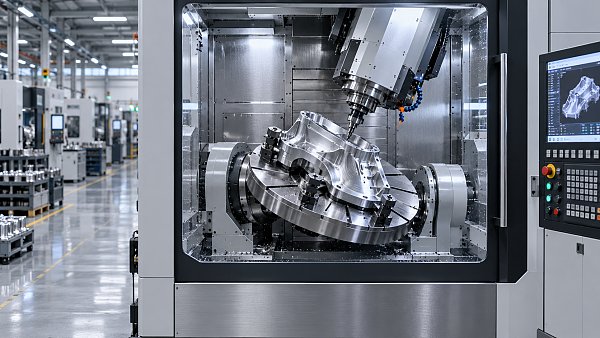
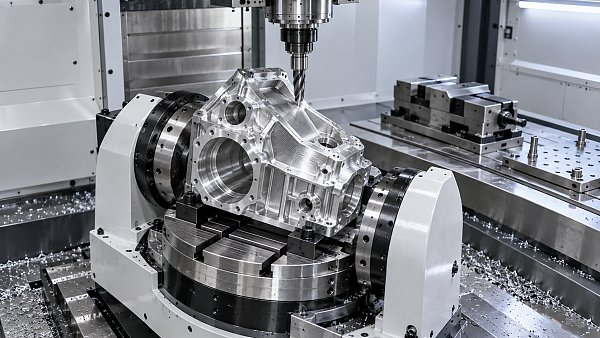
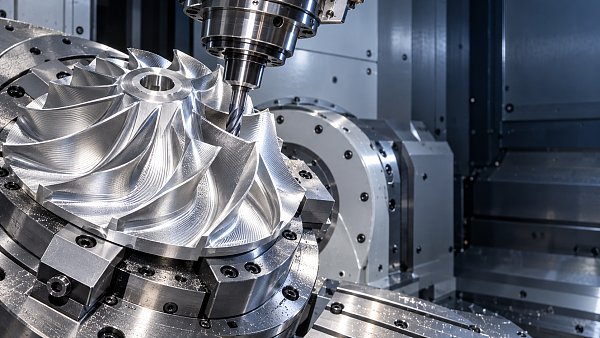
A five-axis machining center can coordinate movement along multiple axes, allowing a cutting tool to approach a workpiece from different orientations. For a complex surface, that capability can provide more flexibility in planning how the part is machined. It can also affect how often the workpiece must be repositioned, although the outcome depends on the geometry, machine setup and machining strategy.
This distinction matters when interpreting claims about precision. Fewer changes in setup could reduce some opportunities for alignment errors, but the number of axes alone does not establish the accuracy of a finished component. The complete process, including how the workpiece is held and how machining is planned, remains relevant.
Where efficiency gains may appear
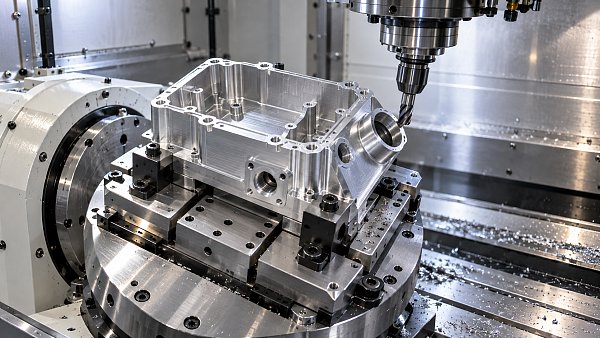
For shipbuilders considering complex hull components, a potential efficiency benefit lies in the relationship between machining operations and setup. If a component can be reached from several directions without repeated repositioning, some handling and preparation time may be reduced. The extent of any saving would depend on the part and the production process.
Efficiency also needs to be considered across the wider workflow. A machining approach that changes how a component is produced may require corresponding work in programming, process planning and inspection. A faster individual operation would therefore be only one part of the assessment; the more useful question is how the complete process performs from the digital design to the finished component.
The same applies to precision. A machining center’s capabilities are relevant, but the practical value for a shipbuilder depends on whether the finished part meets its requirements consistently. Belotti’s article identifies precision and efficiency as advantages of the technology; it does not, in the information available about the publication, establish a specific improvement for a particular vessel or component.
What the article signals for marine manufacturing
Belotti’s publication reflects interest in applying advanced CNC machining to shipbuilding and marine engineering. It is a technical discussion by an equipment manufacturer, rather than an announcement of a specific shipbuilding project or a measure of industry adoption.
For production teams, the most immediate question is which components have geometry and manufacturing requirements that make five-axis machining useful. For design and programming teams, the related issue is how reliably a digital model can be translated into a workable machining process. Those questions connect the article’s discussion of digital design directly to its focus on hull production.
Further evidence of the technology’s impact would come from details of actual applications, including the components involved and the production requirements they address. Comparisons of complete processes would be especially useful in understanding where improved access or fewer setups translate into meaningful gains. Until then, the clearest conclusion is that five-axis machining offers capabilities relevant to complex marine components, while their value depends on how they are applied.
Facing technical bottlenecks in manufacturing or looking for more efficient industrial solutions? Leave your details below and let the engineering experts at G-PME solve them for you.
We respect your privacy. Your information is strictly confidential.
Recommended News
 Belotti Examines 5-Axis CNC Machining in Shipbuilding5-axis CNC machining in shipbuilding: discover how Belotti connects digital design to complex hull production and explores potential precision and efficiency gains.
 How to compare ATC cycle time data across machining centersCompare ATC cycle time data with confidence. Learn how timing boundaries, tool loads and machine conditions affect real-world machining performance.
 How to reduce cybersecurity risks in connected 5-axis machinesReduce cybersecurity risks in connected 5-axis machines with practical steps for network segmentation, secure remote access, data protection and recovery.
 How thermal drift affects accuracy in precision machining centersPrecision machining centers can lose accuracy as temperatures change. Discover how to identify thermal drift, control its causes, and maintain consistent part quality.
 METALEX 2026 Brings More Than 3,000 Brands to BangkokMETALEX 2026 brings over 3,000 brands to Bangkok, November 18–21. Explore metalworking, automation and practical sourcing insights for your next equipment purchase.
 India Unveils Homegrown 2-Micron 5-Axis CNC Machine for Semiconductor PushIndia’s 2-micron, 5-axis CNC machine could support semiconductor localization. Explore its sourcing potential and what buyers should verify.
 How much accuracy do precision machining centers retain over time?Precision machining centers can stay accurate for years—but how can you tell? Discover the tests and factors that reveal real-world performance.
 How to measure spindle nose runout with a dial indicatorMeasure spindle nose run out with a dial indicator. Learn how to set up safely, calculate TIR, and compare results with the right specification.
 How to evaluate 5-axis machining suppliers in North AmericaEvaluate 5 axis machining North America suppliers with confidence. Compare capabilities, quality controls, lead times, and total costs before you commit.
 How ISO 230-1 addresses machine tool static stiffness testingMachine tool stiffness ISO testing explained: discover how ISO 230-1 guides force-deflection measurements and supports meaningful machine comparisons.
 Japan's Machine Tool Export Controls Accelerate China's Five-Axis SubstitutionJapan's machine tool export controls are accelerating China's five-axis CNC substitution. Explore the implications for buyers and supply chains.
 Shanghai Plan Targets Ultra-Precision Machining and Five-Axis Machine Tool UpgradesShanghai's ultra-precision machining and five-axis machine tool upgrade priorities could shape equipment investment. Explore potential opportunities and what buyers should verify.
 Are CNC spindle suppliers expanding local repair for five-axis machines?Explore cnc spindle supplier trends in local repair for five-axis machines. Learn how to verify repair capacity, compare exchange options, and choose support that reduces downtime.
 Do Complex Electronic Components Need 5-Axis Machining?How much does 5-axis machining cost compared with 3-axis machining? Discover when extra axes pay off for electronic components and compare total costs to choose the right process.
 How Much Does 5-Axis Machining Cost Compared With 3-Axis Machining?What should be included in a CNC machining RFQ? Compare 5-axis vs. 3-axis costs, uncover hidden charges, and learn how to request comparable quotes to find the best value for your parts.
 Which ISO standards apply to five-axis machine accuracy testing?Explore ISO machine accuracy standards for five-axis machining. Learn how ISO 230 and ISO 10791 guide geometry, positioning, and motion tests to define clearer acceptance criteria.
 How bearing prices shape machine tool spindle production cost trendsExplore how bearing prices shape spindle production cost trends, from assembly and testing to supply risks. Uncover hidden costs and make smarter sourcing decisions.
 Carrier Plans $600 Million Advanced Manufacturing Center With 5-Axis CNC EquipmentCarrier plans a $600M+ advanced manufacturing center with 5-axis CNC equipment in Texas. Explore potential opportunities for machining suppliers and commercial chiller buyers.
 Aluminum vs. titanium for lightweight parts with equal stiffnessEngineering materials comparison: lightweight alloys aluminum and titanium face off at equal stiffness. Discover how geometry, loading, and cost guide the best choice for lighter parts.
 When does precision engineering machining need a 5-axis machine?Discover when precision engineering machining needs 5-axis capability. Compare 3+2 and simultaneous machining to improve tool access, control costs, and choose the right process.
 When do automated CNC cell systems pay off for 5-axis machining?When do automated cnc cell systems pay off for 5-axis machining? Discover how demand, unattended reliability, and total costs shape ROI—and build a stronger investment case.
Search News
Popular Tags