How Do You Compare Industrial Pump Suppliers Beyond Price?
To compare industrial pump suppliers beyond price, evaluate how well each proposed pump will perform in your process, what evidence supports that selection, and how the supplier will keep it operating. Start with technical suitability, then compare energy use, maintenance demands, spare parts, service support, and contractual commitments. A competitive quotation only has value when these conditions are clear.
The most useful comparison begins with a common operating specification. If suppliers quote against different assumptions about flow, pressure, fluid properties, or operating hours, their prices and performance claims are not directly comparable. Resolve those differences before ranking the offers.
What information should every supplier receive before quoting?
Give each supplier the same description of normal operation, expected variations, and demanding conditions. A single flow rate and discharge pressure rarely describe the full job. Batch transfers, continuous circulation, chemical dosing, and slurry handling create different requirements even when their nominal flow rates look similar.
Your enquiry should establish:
- Required flow and head: Include normal, minimum, and maximum operating conditions, along with elevation changes and piping losses.
- Fluid characteristics: Identify composition, concentration, temperature, density, viscosity, solids, and any tendency to crystallize or release gas.
- Suction conditions: Describe vessel pressure, liquid level variations, suction piping, and available inlet conditions.
- Operating pattern: State expected running hours, starts and stops, cleaning cycles, and control requirements.
- Installation constraints: Include available power, space, environmental conditions, connections, and maintenance access.
Ask suppliers to list assumptions and exceptions explicitly. A supplier that identifies missing suction data or questions an unsuitable operating range provides useful engineering input. A quotation that silently fills those gaps can leave you buying equipment for conditions your plant does not actually have.
How can I tell whether the proposed pump fits the application?
For a centrifugal pump, request the proposed performance curve with your operating points marked. Review flow, head, efficiency, power demand, and suction requirements across the expected range. Maximum capacity says little about how the pump will behave during everyday operation.
The best efficiency point is the condition at which a centrifugal pump converts input energy into hydraulic output most efficiently. Operating far from that point can also increase hydraulic loading, vibration, and maintenance demands. Ask the supplier to identify the acceptable operating range and explain how your normal and occasional conditions fit within it.
Check net positive suction head, or NPSH, separately. This describes the inlet pressure conditions relevant to avoiding cavitation. Cavitation occurs when vapor bubbles form in the liquid and collapse as pressure rises, potentially causing noise, vibration, and damage. The installation must provide adequate margin above the pump’s stated requirement; simply matching the two values is not a robust selection.
For positive displacement pumps, focus on viscosity effects, inlet filling, speed, pressure limits, and overpressure protection. Metering applications also need evidence of dosing performance across the required adjustment range and backpressure conditions. A centrifugal pump efficiency comparison cannot answer those questions.
Ask how performance changes during startup, low demand, or future expansion. Oversizing for a possible future requirement can create inefficient or unstable operation today. A variable speed drive may help, but it cannot correct every unsuitable pump selection.
How should I compare materials, seals, and mechanical construction?
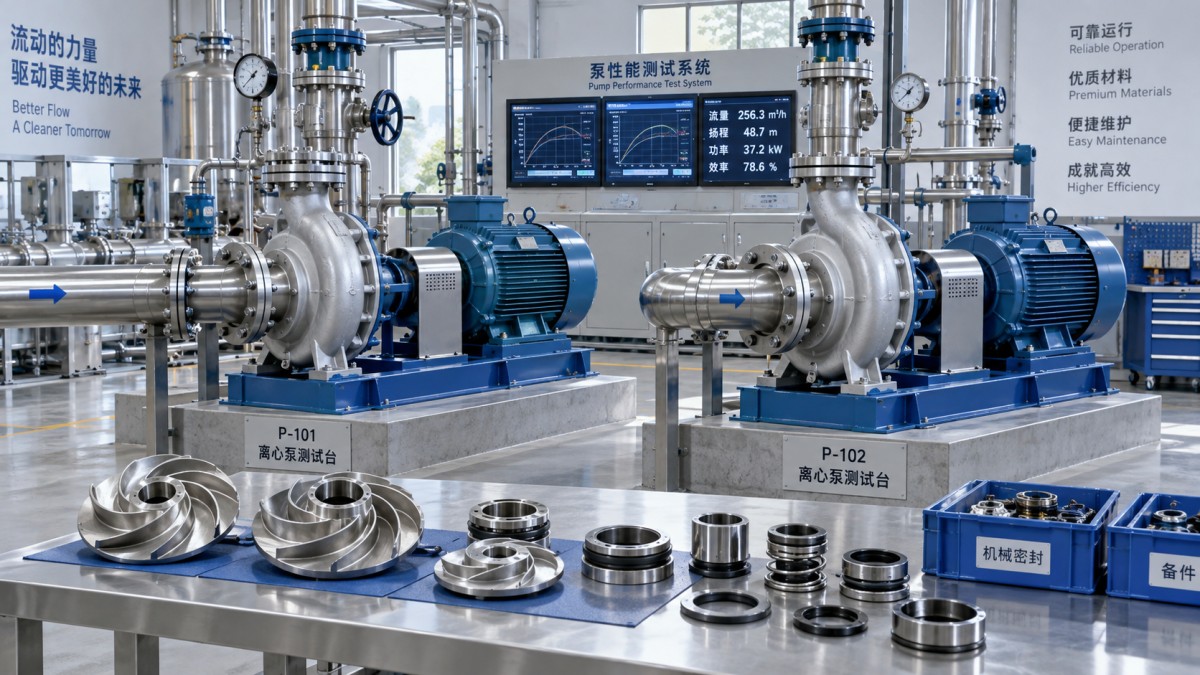
Material compatibility must cover every wetted component, including the casing, impeller or pumping elements, shaft sleeves, seals, gaskets, and elastomers. “Stainless steel construction” is too broad to establish suitability. Request exact material grades and the operating conditions used for the compatibility assessment.
Temperature, chemical concentration, cleaning fluids, and contaminants can change the result. A material suitable for a dilute solution at ambient temperature may behave differently when the liquid becomes hotter or more concentrated. Abrasive solids introduce wear concerns alongside corrosion.
Seal selection deserves particular attention because leakage and seal replacement can dominate maintenance. Ask why the proposed arrangement suits the fluid and whether it requires flushing, cooling, barrier fluid, or other support equipment. Include those requirements in both the installation scope and operating cost.
A sealless pump may reduce concerns associated with a rotating shaft seal, but its suitability still depends on the liquid, solids content, operating limits, and protection against dry running. Compare the complete design rather than treating one construction feature as a universal advantage.
Maintenance access also matters. Check whether routine service requires disturbing piping, removing the motor, or lifting heavy assemblies in a confined area. A compact installation can become costly if ordinary repairs require extensive dismantling.
What evidence should I request for performance and reliability?
Ask suppliers to distinguish between published product data, calculated selection results, and tests performed on the supplied equipment. Each provides a different level of evidence. A catalog curve supports initial selection, while a defined acceptance test establishes whether the delivered pump meets agreed requirements.
Specify the test scope, measurement conditions, acceptance tolerances, and documents required before placing the order. Testing with water may be appropriate for hydraulic acceptance, but it does not automatically establish behavior with a viscous, abrasive, or gas-containing process fluid. The supplier should explain any corrections and remaining limitations.
References are most useful when the fluid, duty, operating pattern, and equipment configuration resemble yours. A long installation list offers limited insight if the applications differ substantially. Ask about failure modes and corrective actions as well as successful operation.
Which standards and certifications actually matter?
Separate quality management certification from product conformity. A supplier’s quality system can support consistent manufacturing and document control, but it does not establish that a particular pump meets your hydraulic, material, or safety requirements.
Applicable requirements depend on the service and installation. Chemical processing, hygienic production, hazardous locations, and general water circulation can call for different design features and documentation. Select requirements that address the application rather than rewarding the longest list of standards.
For every claimed standard, ask which equipment and activities it covers, what evidence accompanies delivery, and whether the quotation contains deviations. Relevant documents may include material certificates, inspection records, performance reports, and equipment identification.
This is where the technical benchmarking approach described by Global Precision-Machining & Engineering (G-PME) is relevant: connecting specifications and standards to verifiable evidence. A standards reference becomes useful when it answers a specific engineering or acceptance question.
How do I compare lifecycle costs without false precision?
Use the same evaluation period, operating schedule, electricity assumptions, and maintenance basis for every offer. Include purchase, installation, energy, consumables, planned maintenance, spare parts, and disposal where relevant. Consider production interruption separately so uncertain downtime estimates do not disappear inside an apparently precise total.
For equipment that runs continuously, modest differences in input power can accumulate over time. Estimate energy use from power demand at the actual operating points and the hours spent at each condition. Motor nameplate power is a capacity rating, not a reliable estimate of consumption.
For intermittent duty, energy may have less influence than cleaning time, seal replacement, or availability after long idle periods. Hazardous or high-value fluids may make containment and product loss especially important. The application determines which costs deserve the most attention.
Include auxiliary requirements. Seal support systems, flushing water, cooling, compressed air, controls, and protective instruments can add cost and operating complexity. Two pump quotations may appear similar while excluding very different amounts of necessary equipment.
Use sensitivity checks where assumptions are uncertain. Compare what happens if energy prices rise, the operating schedule changes, or maintenance becomes more frequent. A supplier whose value depends on one optimistic assumption deserves closer examination.
How can I assess spare parts, service, and supply-chain resilience?
Request a recommended spare parts list with part numbers, prices, lead times, and stocking locations. Distinguish parts held locally from those manufactured after an order. An advertised service network is less useful if the seal or rotating assembly needed for recovery must still come from a distant factory.
Ask who provides technical support, who can attend the site, and what work they are authorized and equipped to perform. Clarify whether support covers commissioning, alignment, troubleshooting, and repair. A named contact and written service scope are easier to act on than a general promise of availability.
Supply resilience also depends on component availability and change control. Ask how the supplier handles discontinued parts, material substitutions, and design revisions. Substitutions affecting compatibility or performance should require an agreed review.
Standardizing pumps across a site can simplify training and spares, provided the selected designs remain suitable for each service. Forcing one model into every application can trade inventory convenience for recurring operating problems.
Should I use a weighted scorecard to select the supplier?
Yes, after establishing mandatory acceptance criteria. Reject or resolve offers that fail essential requirements for hydraulic performance, materials, safety, or documentation. A weighted score should not allow a low price to compensate for an unsuitable design.
For technically acceptable offers, weight the remaining criteria according to operational consequences. A continuously operating production pump may justify greater emphasis on efficiency, maintainability, and recovery support. A readily replaceable utility pump may justify greater emphasis on availability and straightforward servicing.
Score evidence as well as promises. “Local stock” supported by an identified parts list is stronger than an unqualified statement. “Meets duty” supported by a selection curve and acceptance commitment is stronger than a catalog headline. Keep unresolved assumptions visible instead of awarding full credit.
Review meaningful differences before calculating a final ranking. Small score differences can conceal large uncertainties, especially when one supplier has supplied detailed evidence and another has left important questions unanswered.
What should be settled before placing the order?
Convert the selected proposal into an agreed technical and commercial scope. Record operating conditions, guaranteed performance, materials, auxiliary equipment, documentation, testing, delivery milestones, and commissioning responsibilities. Define the process for addressing acceptance failures and changes to the specification.
Read warranty conditions alongside installation and operating requirements. Determine when coverage starts, which costs are included, and what obligations apply to alignment, startup, maintenance, and approved consumables. A longer warranty has limited practical value if it excludes the costs most likely to affect recovery.
Before approval, ask one final question: if this pump cannot meet duty or needs an urgent repair, does the order make clear who must act, what support is available, and how performance will be assessed? A well-supported answer is a stronger basis for selection than purchase price alone.
Recommended News
 When does precision engineering machining need a 5-axis machine?Discover when precision engineering machining needs 5-axis capability. Compare 3+2 and simultaneous machining to improve tool access, control costs, and choose the right process.
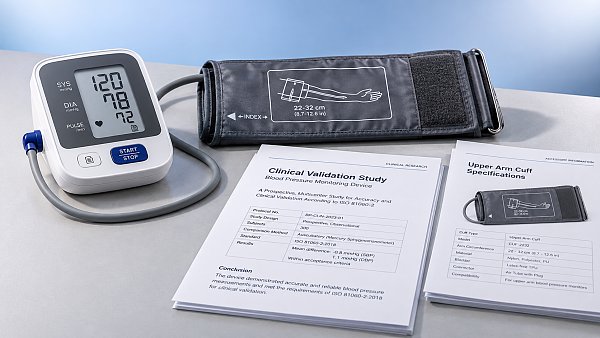
 How to check clinical validation of wholesale blood pressure monitorsSourcing blood pressure monitors wholesale? Learn how to verify clinical studies, registry listings, cuff coverage, and model identity before approving your next bulk order.
 How much lithium battery storage do you need for solar energy?Lithium battery storage for solar energy: learn to calculate capacity, account for losses, and check backup power. Avoid costly sizing mistakes and find the right system for your needs.
 11th CIMSS Conference in Wuxi to Focus on Metalworking Fluid Industry UpgradesExplore the 11th CIMSS Conference in Wuxi, October 22–23, 2026, for insights into metalworking fluid innovation, industrial cleaning and cost control to support industry upgrades.
 Can solid-state battery breakthroughs scale to mass-produced EVs?Solid-state battery breakthroughs for electric vehicles: can they scale? Explore manufacturing yield, pack costs, and real-world performance to uncover what stands between lab success and mass production.
 Can digital manufacturing improve competitiveness by cutting lead times?Explore digital manufacturing competitiveness: learn how shorter lead times, smarter scheduling, and connected quality data can help win orders and cut costs without compromising quality.
 How to size a hydraulic press for forging large steel componentsSize a hydraulic press for forging large steel components with confidence. Learn how to assess forming force, working speed, stroke, and capacity limits to avoid costly selection errors.
 Aerospace Actuator Maker 7958 Joins Emerging Stock Market on October 22Aerospace actuator maker 7958 joins the Emerging Stock Market on October 22, 2026. Explore its precision motor technology and growth plans for drones and robotics.
 How to calculate payload for industrial robots removing molded partsSize industrial robots for molded-part removal with confidence. Learn to calculate total payload, center of gravity, inertia, and extraction loads to avoid overloads and optimize cycle times.
 When do automated CNC cell systems pay off for 5-axis machining?When do automated cnc cell systems pay off for 5-axis machining? Discover how demand, unattended reliability, and total costs shape ROI—and build a stronger investment case.
 When is industrial procurement support worth the cost for tooling?When is industrial procurement support worth the cost for tooling? Discover how to compare total costs, assess supplier risk, and build a clear break-even case before you invest.
 How to assess a mold manufacturer's cooling design expertiseAssess a mold engineering manufacturer's cooling expertise with key checks for thermal simulations, circuit flow, and mold trials. Learn what evidence to demand before approving your supplier.
 How to vet OEM mold suppliers in a manufacturing directoryUsing a manufacturing directory with OEM suppliers? Learn how to vet mold makers, verify capabilities, compare quotes, and define acceptance criteria to reduce sourcing risk.
 Desma USA Introduces DataHub and Molding Technology to Improve Production EfficiencyExplore Desma USA’s DataHub, valve-gate and cavity-pressure technology to see how these innovations could enhance process control and improve molding production efficiency.
 How energy costs shape manufacturing competitiveness in the Middle EastManufacturing competitiveness Middle East guide: discover how energy costs, efficiency, and reliable power shape factory margins—and make smarter site and equipment investments.
 Choosing a compatible automatic tool changer for 5-axis CNCs in EuropeAutomatic tool changer Europe guide: find the right fit for your 5-axis CNC. Compare tool limits, collision clearance, safety and local support to avoid costly mistakes.
 When is a Swiss-type lathe worth the investment in Europe?Swiss type lathe Europe: is it worth the investment? Compare ownership costs, verified savings and payback scenarios to build a stronger business case before you buy.
 Will wireless alarm systems still work during a power outage?Will wirelessalarmsystems work during a power outage? Discover which features stay active, why cellular backup matters, and what to check before choosing your alarm.
 What affects lead times when buying carbide inserts in Europe?Buying carbide inserts Europe-wide? Discover how stock, specifications, factory schedules and shipping affect lead times, and learn what to confirm to keep production running.
 Which window treatments provide privacy without blocking daylight?Discover window treatments that balance privacy and daylight. Compare cellular shades, sheers, and layered options to find the right fit—and avoid nighttime privacy surprises.
 How to verify a 5-axis CNC machine supplier's MTTF claimsVerify MTTF for CNC machine tools supplier claims with expert checks on failure records, operating hours, and confidence bounds. Make a smarter 5-axis CNC investment.













Search News
Popular Tags