
RoHS Manufacturing Standards Explained: Requirements, Scope, and Compliance Checks
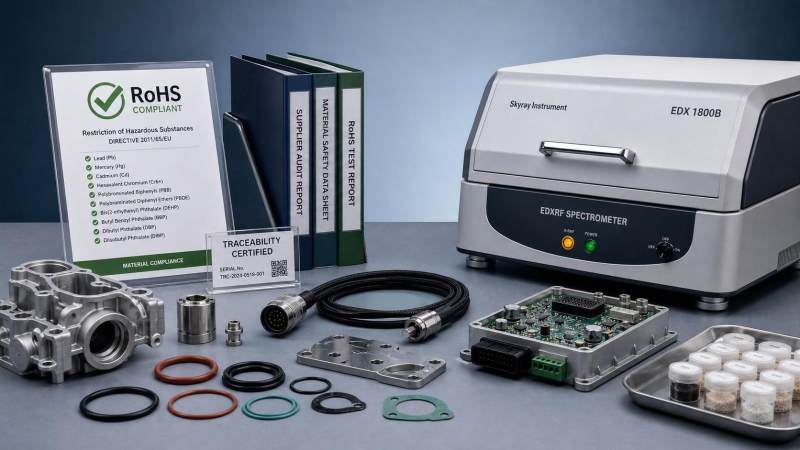
RoHS manufacturing standards sit at the intersection of product safety, material control, and market access. For operations tied to electrical assemblies, industrial components, or export supply chains, a weak understanding of substance restrictions can turn into rejected shipments, redesign costs, or audit pressure.
That is why manufacturing standards RoHS matter beyond formal compliance. They shape sourcing choices, supplier qualification, incoming inspection, and document control across machining, casting, fastening, sealing, pumping, and other production environments where metal parts meet coatings, plastics, solders, oils, or electronic subassemblies.
Within data-led industrial platforms such as G-PME, RoHS is not treated as a narrow legal checkbox. It is part of a broader framework for material integrity, traceability, and performance assurance, especially where global specifications and cross-border procurement define commercial viability.
What RoHS really covers in manufacturing
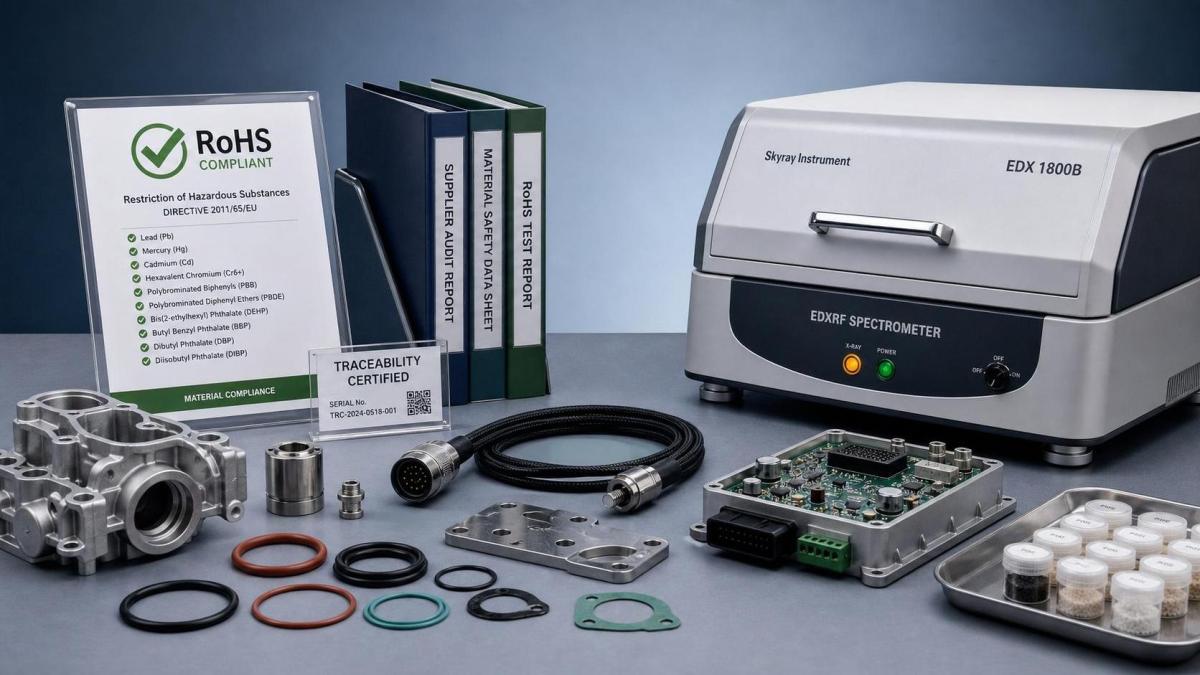
RoHS stands for Restriction of Hazardous Substances. In practical terms, it limits specific substances in electrical and electronic equipment, along with many related parts, materials, and assemblies placed on regulated markets.
The best known restricted substances include lead, mercury, cadmium, hexavalent chromium, PBB, and PBDE. Later updates added four phthalates, extending scrutiny to cables, polymers, seals, and soft plastic components.
This is where confusion often starts. A precision-machined housing may look outside the regulation if viewed alone. Yet once it becomes part of a controlled electrical assembly, its finishes, platings, labels, gaskets, and packaging-related declarations may enter the compliance review.
Manufacturing standards RoHS therefore are not limited to electronics factories. They affect mixed industrial supply chains where mechanical parts, embedded controls, fluid systems, fastening hardware, and molded components are integrated into final regulated equipment.
Why the issue has become more important
Market expectations have changed. Buyers now expect suppliers to provide not only dimensional accuracy and mechanical performance, but also defensible material declarations and controlled substance evidence.
Several forces are pushing this shift:
- Broader regulatory enforcement in global electronics and industrial exports.
- More complex products combining metal, polymer, coating, adhesive, and cable content.
- Pressure for cleaner supplier data during audits and customer onboarding.
- Higher reputational risk when compliance claims cannot be verified.
In sectors tracked by G-PME, this is especially visible where engineered components move across multiple tiers before final assembly. Once a declaration gap appears at one tier, the downstream manufacturer absorbs both the timeline disruption and the regulatory exposure.
Requirements that usually deserve the closest attention
The core requirement is simple to state: restricted substances must remain below the permitted concentration limits in each homogeneous material, unless a valid exemption applies.
The operational challenge is that compliance depends on detail. A finished part may include several homogeneous materials, each with its own risk profile.
Material-level thinking matters
A machined stainless component may be low risk at the base metal level. The risk often sits elsewhere: chromate conversion coatings, painted markings, soldered connectors, polymer inserts, cable jackets, or adhesive-backed labels.
That is why manufacturing standards RoHS should be reviewed at the bill-of-material and process level, not only at the finished goods level.
Exemptions are not permanent assumptions
Some applications rely on exemptions, especially where technical substitution remains difficult. However, exemption scope, wording, and validity periods can change. Old declarations should not be recycled without review.
Documentation is part of compliance
A compliant product with weak records is still vulnerable during customer checks. Technical files, supplier declarations, material statements, and test evidence need to be consistent, current, and traceable to the actual part revision.
Where RoHS risk appears across industrial categories
RoHS risk rarely distributes evenly. Some component types carry much higher uncertainty than others, even within the same assembly.
The table highlights a broader point. Manufacturing standards RoHS often depend less on the headline component and more on hidden materials introduced by finishing, joining, insulation, or packaging conversion steps.
How compliance checks should work in practice
Effective checks combine document review, risk ranking, and selective testing. Testing alone is too slow and expensive for every item. Paper declarations alone are too weak for high-risk parts.
Start with supplier evidence
Request full material declarations, RoHS declarations of conformity, exemption references where relevant, and change-notification commitments. The documents should match part numbers, revisions, and manufacturing sites.
Rank components by likely exposure
High-risk items usually include solders, cables, soft plastics, colorants, coatings, adhesives, and imported subassemblies with limited upstream visibility. Low-risk solid metals still need confirmation, but often require less frequent testing.
Use screening and laboratory methods appropriately
XRF screening is useful for rapid checks on metals, platings, and some polymers. It is not a complete answer for every restricted substance. Where risk is higher, laboratory analysis should support the decision.
- Check whether the part is in scope as supplied or only in final assembly.
- Confirm homogeneous materials, not only overall part weight.
- Review coatings and nonmetal additions separately.
- Verify exemption references against current legal text.
- Tie documents to batch, revision, and approved vendor records.
Common weak points that trigger nonconformity
Most failures are not caused by one dramatic oversight. They emerge from ordinary process gaps that accumulate over time.
A familiar example is supplier substitution. A gasket compound, cable jacket, or plated fastener changes without timely declaration updates. The drawing remains the same, but the compliance basis no longer does.
Another issue is assuming that ISO-certified production automatically covers RoHS. Quality systems help, but they do not replace substance-specific review, especially when multiple subcontractors handle finishing or subassembly work.
Manufacturing standards RoHS also become fragile when records live in disconnected spreadsheets, emails, and vendor PDFs. During an audit, fragmented data slows response and weakens confidence in the declared status.
Building a stronger control framework
A durable RoHS program is built into existing quality controls rather than treated as a side activity. That means linking compliance checkpoints to supplier approval, engineering change control, incoming inspection, and release documentation.
In a diversified industrial setting, this approach works well:
- Create a controlled list of parts and materials with RoHS relevance.
- Assign risk levels by material type, process, and supplier transparency.
- Define renewal cycles for declarations and exemption checks.
- Escalate testing when a source, formula, or finishing process changes.
- Keep technical files aligned with customer, market, and product revisions.
This is also where technical intelligence platforms add value. When material prices, sourcing routes, and supplier footprints shift, compliance risk can move with them. RoHS review should therefore be connected to sourcing intelligence, not isolated from it.
What to evaluate next
The next useful step is not broad policy language. It is a focused review of where manufacturing standards RoHS touch real products, drawings, suppliers, and incoming materials.
Start with the assemblies most exposed to export requirements, electrical integration, or complex finishing processes. Then compare declared substance status against actual material structure, supplier change history, and available test support.
When the compliance trail is clear, product release decisions become faster and more defensible. When it is unclear, the gap is usually visible early enough to correct before it becomes a shipment or market-access problem.
RoHS is not only a regulation to pass. In disciplined manufacturing environments, it becomes a practical filter for cleaner materials, better traceability, and more reliable cross-border execution.
Recommended News
 How to use data analytics to reduce scrap in injection moldingUse data analytics to reduce injection molding scrap. Learn which production data to track, how to uncover defect causes, and how to verify improvements that cut waste and protect quality.
 What affects the cost of axis calibration on a 5-axis machine?Understand axis calibration cost for 5-axis machines, from rotary-axis condition to downtime. Learn how to compare quotes, avoid hidden fees, and secure verified accuracy.
 How to verify a supplier's chip removal rate measurement accuracyReview chip removal metrics supplier teams provide. Learn how to verify removal rates, calibration, timing, and uncertainty for smarter, more confident purchasing decisions.
 How cryogenic service requirements affect fluid control system pricesExplore fluid control systems price drivers for cryogenic service, from materials and testing to insulation. Learn how to compare quotes, avoid hidden costs, and buy with confidence.
 When is die-cast aluminum suitable for lightweight vehicle housings?Light-weighting vehicle materials: Discover when die-cast aluminum suits vehicle housings, balancing weight savings, tooling costs, sealing, and durability for smarter design decisions.
 How to specify CNC machining tolerances for press-fit assembliesSpecify CNC machining tolerance for reliable press-fit assemblies. Learn to calculate interference, control thermal effects, and verify supplier capability to prevent costly fit failures.
 How to assess five-axis machine tool thermal stability data in Latin AmericaReview machine tool thermal stability data Latin America suppliers provide. Discover how to assess five-axis drift, ISO 230-3 tests, and site conditions for smarter purchasing decisions.
 How thick should fiberglass acoustic insulation be for wall cavities?Fiberglass acoustic insulation: how thick should it be? Explore 3.5- and 5.5-inch wall cavity options, tested STC requirements, and installation tips to avoid costly mistakes.
 How bending radius affects the service life of high-voltage cablesProtect highvoltagecables from bending damage. Discover how bend radius affects service life, which installation limits matter, and practical checks for lasting reliability.
 How Do You Select a Mechanical Seal for Chemical Service?How do I select a mechanical seal for chemical service? Explore material compatibility, single vs. dual seals, and support systems to reduce leakage risks and choose with confidence.
 Why Do Mechanical Seals Fail Prematurely?Why do mechanical seals fail prematurely? Discover how dry running, poor flushing, and misalignment cause leaks—and learn practical checks to prevent repeat failures and reduce downtime.
 Manufacturing Capability Assessment: Can a Process Hold Your Tolerances?Manufacturing capability assessment: Can your supplier hold tight tolerances? Learn how to verify Cp, Cpk, and production evidence to reduce risk and make confident qualification decisions.
 OEM Manufacturing Design Support: What to Resolve Before Tooling StartsOEM manufacturing design support helps resolve materials, tolerances, and inspection before tooling starts. Discover how to avoid costly rework and make confident tooling decisions.
 How to size extrusion equipment for a target production outputSize extrusion equipment to meet your production targets. Learn how to calculate throughput, identify line bottlenecks, and verify capacity to avoid costly sizing mistakes.
 How to assess 5-axis demand in machining center market analysisStrengthen your machining center market analysis: learn how to assess 5-axis workloads, buyer readiness, and investment costs to build credible demand forecasts and avoid costly overestimates.
 Can procurement support reduce contract manufacturing tooling delays?Discover industrial procurement support contract manufacturing teams can use to cut avoidable tooling delays, secure materials, and keep production launches on track.
 Which export insights matter when entering a new market?Export insights for new-market entry: assess demand, standards, delivered costs, supply resilience, and buyer approval paths to build a profitable expansion plan.
 How industrial technology solutions in Southeast Asia handle humid sitesIndustrial technology solutions Southeast Asia: learn how site-adapted materials, sealing, condensation control, and maintenance strategies improve reliability in humid, coastal, and high-corrosion industrial environments.
 How hospitals can size telemedicine hardware for peak virtual visitsTelemedicine hardware for hospitals: learn how to size reliable endpoints for peak virtual visits, optimize reserves, workflows, network readiness, and uptime.
 Which electronic components most affect smart actuator reliability?Electronic components that shape smart actuator reliability: evaluate power supplies, motor drives, sensors, control boards, and connectors for demanding industrial performance.
 When do reshoring CNC investment opportunities justify 5-axis capacity?Explore when reshoring CNC investment opportunities justify 5-axis capacity—reduce setups, strengthen quality control, cut supply-chain risk, and build a resilient local machining strategy.











Search News
Popular Tags