
Are Precision farming drones worth the upgrade?
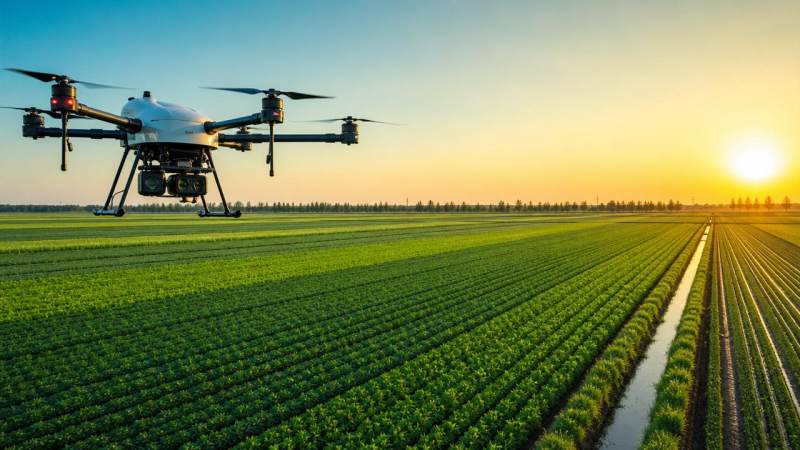
Are Precision farming drones worth the upgrade?
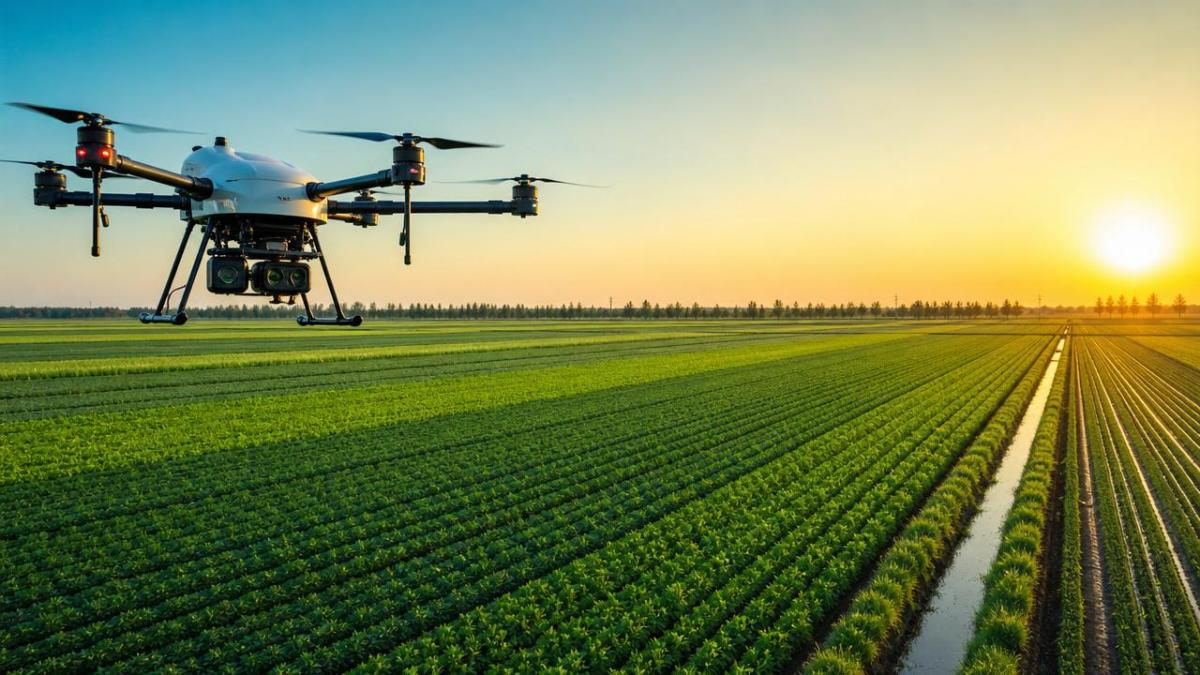
Precision farming drones are moving from experimental tools to boardroom-level investment decisions, promising sharper field intelligence, lower input waste, and faster operational response.
The real question is not whether drone technology is innovative, but whether the upgrade delivers measurable returns across productivity, compliance, and resilience.
For agriculture, engineering, logistics, and industrial service ecosystems, Precision farming drones now represent a data asset, not only an aerial device.
Basic definition and operational scope
Precision farming drones are unmanned aerial platforms equipped with sensors, navigation systems, and analytics workflows for field-level agricultural intelligence.
They typically combine RGB cameras, multispectral sensors, thermal imaging, RTK positioning, and cloud-based agronomic software.
The practical purpose is simple: convert field variability into actionable decisions before yield, water, fertilizer, or chemical losses become expensive.
Unlike manual scouting, Precision farming drones can inspect large areas quickly, consistently, and with repeatable geospatial accuracy.
The upgrade is most valuable when drone data is connected to farm machinery, irrigation planning, crop protection, and procurement forecasting.
A drone alone rarely changes performance. A disciplined data loop is what turns aerial observation into operational improvement.
Industry signals shaping adoption
The case for Precision farming drones is strengthened by pressure on margins, climate uncertainty, traceability requirements, and input price volatility.
Farms and agri-industrial networks increasingly need faster evidence for decisions that were previously based on delayed field reports.
These signals explain why Precision farming drones are being evaluated with the same rigor applied to industrial equipment upgrades.
The upgrade decision increasingly depends on uptime, sensor quality, data integrity, serviceability, and compatibility with existing systems.
Business value beyond aerial imaging
The strongest value from Precision farming drones comes from reducing uncertainty across high-frequency operational decisions.
Crop stress maps can reveal uneven irrigation, compaction, nutrient deficiency, pest pressure, or drainage problems before visual symptoms spread.
This improves timing. Earlier action usually costs less than late correction after yield potential has already declined.
Precision farming drones also support variable-rate applications by converting field maps into treatment zones.
The result can be lower chemical use, reduced overlap, improved compliance records, and better alignment between agronomy and machinery operations.
For industrial supply chains, drone-derived forecasts can improve harvest planning, storage allocation, transport timing, and processing capacity utilization.
This matters because agricultural disruption often affects downstream manufacturing, packaging, food logistics, and commodity-linked procurement.
- Higher scouting frequency without proportionally higher field labor.
- More targeted fertilizer, water, and pesticide decisions.
- Better documentation for sustainability and compliance reviews.
- Faster verification after storms, drought, flooding, or pest events.
- Improved coordination between field teams, equipment, and service providers.
Cost structure and return factors
Precision farming drones are worth the upgrade only when cost is measured across the full operating model.
Purchase price is visible, but training, batteries, maintenance, insurance, software subscriptions, and data processing are equally important.
A low-cost drone may fail commercially if sensor calibration, flight reliability, or analytics accuracy are insufficient.
Return on investment should be calculated through avoided losses, optimized inputs, labor efficiency, and better utilization of existing equipment.
The payback period is usually shortest where crops are high value, fields are large, or input variability is significant.
Precision farming drones are less compelling where fields are uniform, labor is abundant, or data is not used consistently.
Typical application scenarios
Different use cases require different drone specifications, analytics depth, and operating routines.
Selecting Precision farming drones without defining scenarios often leads to underused hardware and weak financial outcomes.
The most mature programs combine repeated flights with ground truthing, weather data, and machine application records.
That combination gives Precision farming drones a stronger evidentiary role in planning and audit processes.
Technical benchmarks for serious evaluation
A credible upgrade review should benchmark Precision farming drones with technical discipline similar to industrial asset evaluation.
Flight endurance, positioning accuracy, sensor calibration, environmental tolerance, and software reliability should be documented before deployment.
Data quality is especially critical. Poor imagery can create false confidence and lead to expensive agronomic mistakes.
Operational uptime also matters. Batteries, propellers, landing gear, gimbals, and charging workflows influence real field productivity.
- Require repeatable flight plans for comparable seasonal data.
- Verify RTK or PPK capability where mapping precision is essential.
- Check sensor calibration procedures and reflectance panel support.
- Confirm data export to GIS, machinery, or enterprise platforms.
- Define cyber, privacy, and storage policies for field data.
Internationally aligned operating discipline, including safety, documentation, and maintenance control, improves reliability across multi-site deployments.
This is where engineering governance becomes as important as the drone specification sheet.
Implementation risks and practical controls
The main risk is treating Precision farming drones as a shortcut rather than a structured measurement system.
Common failures include irregular flights, unclear metrics, weak training, incompatible software, and limited follow-through after maps are generated.
Regulatory compliance must also be addressed, including airspace rules, pilot certification, privacy expectations, and insurance coverage.
A staged rollout reduces risk. Begin with a limited acreage, defined crop objective, and measurable baseline.
- Identify the decision that drone data must improve.
- Select sensors based on that decision, not fashion.
- Run pilot flights across different field conditions.
- Compare drone insights with ground inspection results.
- Calculate savings, avoided losses, and response time gains.
- Scale only after workflow reliability is proven.
This approach prevents overinvestment and keeps Precision farming drones tied to operational outcomes.
Decision framework for the upgrade
Precision farming drones are worth the upgrade when three conditions are present.
First, the operation has meaningful field variability that can be detected and acted upon quickly.
Second, there is a workflow for turning maps into treatment, irrigation, scouting, or logistics decisions.
Third, the organization can maintain data quality, operator discipline, and equipment reliability across seasons.
If these conditions are absent, the upgrade should begin as a service-based trial rather than an immediate capital purchase.
If they are present, Precision farming drones can become a high-value layer in precision agriculture and broader supply-chain intelligence.
Action path for measurable adoption
The next step is not choosing the most advanced aircraft. It is defining the performance question the aircraft must answer.
Build a baseline around current scouting cost, input use, yield variability, response time, and documentation quality.
Then test Precision farming drones against that baseline through controlled flights, validated analytics, and clearly assigned response actions.
G-PME’s engineering perspective supports this kind of evidence-based upgrade logic across assets, data systems, and operational standards.
When evaluated with technical rigor, Precision farming drones can justify investment through productivity, resilience, compliance, and better resource control.
The upgrade is worthwhile when aerial intelligence becomes a repeatable decision system, not an isolated imaging exercise.
Recommended News
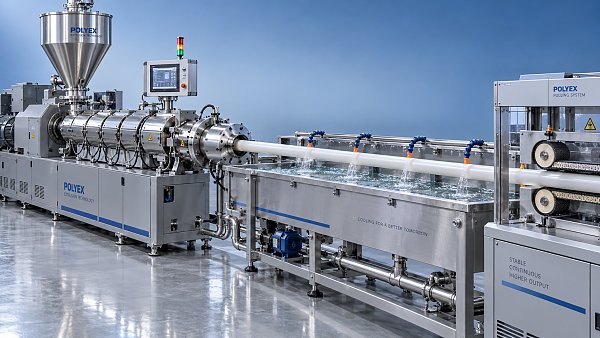
 How to size extrusion equipment for a target production outputSize extrusion equipment to meet your production targets. Learn how to calculate throughput, identify line bottlenecks, and verify capacity to avoid costly sizing mistakes.
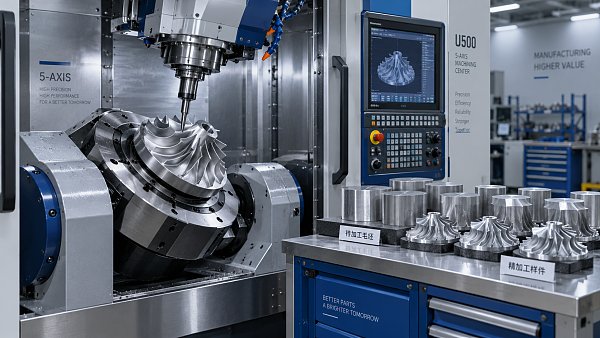
 How to assess 5-axis demand in machining center market analysisStrengthen your machining center market analysis: learn how to assess 5-axis workloads, buyer readiness, and investment costs to build credible demand forecasts and avoid costly overestimates.
 Can procurement support reduce contract manufacturing tooling delays?Discover industrial procurement support contract manufacturing teams can use to cut avoidable tooling delays, secure materials, and keep production launches on track.
 Which export insights matter when entering a new market?Export insights for new-market entry: assess demand, standards, delivered costs, supply resilience, and buyer approval paths to build a profitable expansion plan.
 How industrial technology solutions in Southeast Asia handle humid sitesIndustrial technology solutions Southeast Asia: learn how site-adapted materials, sealing, condensation control, and maintenance strategies improve reliability in humid, coastal, and high-corrosion industrial environments.
 How hospitals can size telemedicine hardware for peak virtual visitsTelemedicine hardware for hospitals: learn how to size reliable endpoints for peak virtual visits, optimize reserves, workflows, network readiness, and uptime.
 Which electronic components most affect smart actuator reliability?Electronic components that shape smart actuator reliability: evaluate power supplies, motor drives, sensors, control boards, and connectors for demanding industrial performance.
 When do reshoring CNC investment opportunities justify 5-axis capacity?Explore when reshoring CNC investment opportunities justify 5-axis capacity—reduce setups, strengthen quality control, cut supply-chain risk, and build a resilient local machining strategy.
 What compliance documents should an industrial chemicals exporter provide?Industrial chemicals exporter compliance guide: learn which SDS, CoA, transport, customs, and market-access documents help prevent delays and risks.
 How to assess a smart device manufacturing solutions factoryAssess a smart device manufacturing solutions factory with practical insights on engineering, quality, testing, supply-chain resilience, and pilot builds.
 What CE certification means for a CNC controller systemCNC controller system CE certified: learn what CE marking covers, how to verify safety, EMC, documentation, and retrofit compliance for EU machinery.
 When industrial sewing is the right fit for high-volume productionIndustrial sewing for high-volume production: learn how seam design, material control, automation, and quality planning drive reliable output and lower risk.
 How ATC tool change time data reveals hidden cycle-time lossesATC tool change time data reveals hidden cycle-time losses, separates mechanical delays from program motion, and helps manufacturers improve uptime, capacity, and delivery confidence.
 What to verify before selecting a sinker EDM machine supplierChoose a reliable sinker EDM machine supplier with confidence. Verify machining trials, electrode compatibility, automation, service support, and total ownership risk.
 How brass alloy choice affects industrial machining part tolerancesIndustrial machining brass parts: discover how alloy selection influences tolerance stability, tool wear, bore accuracy, threads, and reliable high-volume production.
 What to verify before selecting an electronics contract manufacturerElectronics manufacturing solutions: learn what to verify before choosing a contract manufacturing partner, from quality systems and testing to sourcing, traceability, and change control.
 How to check color accuracy before approving custom enamel pinsCustom enamel pins color accuracy starts before approval. Learn how to review Pantone references, proofs, plating, and samples for confident results.
 When do multilayer carbide coatings extend tool life in dry machining?Multilayer carbide coatings extend tool life in dry machining when heat, adhesion, abrasion, and edge loading are controlled. Learn how to match layers, substrates, and parameters for reliable performance.
 When occupancy controls reduce warehouse lighting energy wasteWarehouse lighting occupancy controls cut energy waste through smarter zoning, sensor placement, dimming, and commissioning. Discover practical strategies for safer, lower-cost operations.
 How to size an ESS for reducing peak-demand chargesESS sizing for peak-demand charge reduction: learn how to match power, usable energy, tariff rules, controls, and recharge strategy to lower billed demand reliably.
 How textile chemicals affect dye-house wastewater treatment costsTextile chemicals can raise dye-house wastewater treatment costs through COD, color, sludge, salt, and fouling. Discover practical ways to assess total chemical cost.









Search News
Popular Tags